It’s been some time since I posted on DREAM OF THE CITY.
The main reason for this was a sudden urge to get back to my novel. After a first round of rejections by literary agents, and some very useful feedback from agents and friends, I set my manuscript aside for a few months. Early this year, I saw the light through the darkness, and started editing again.
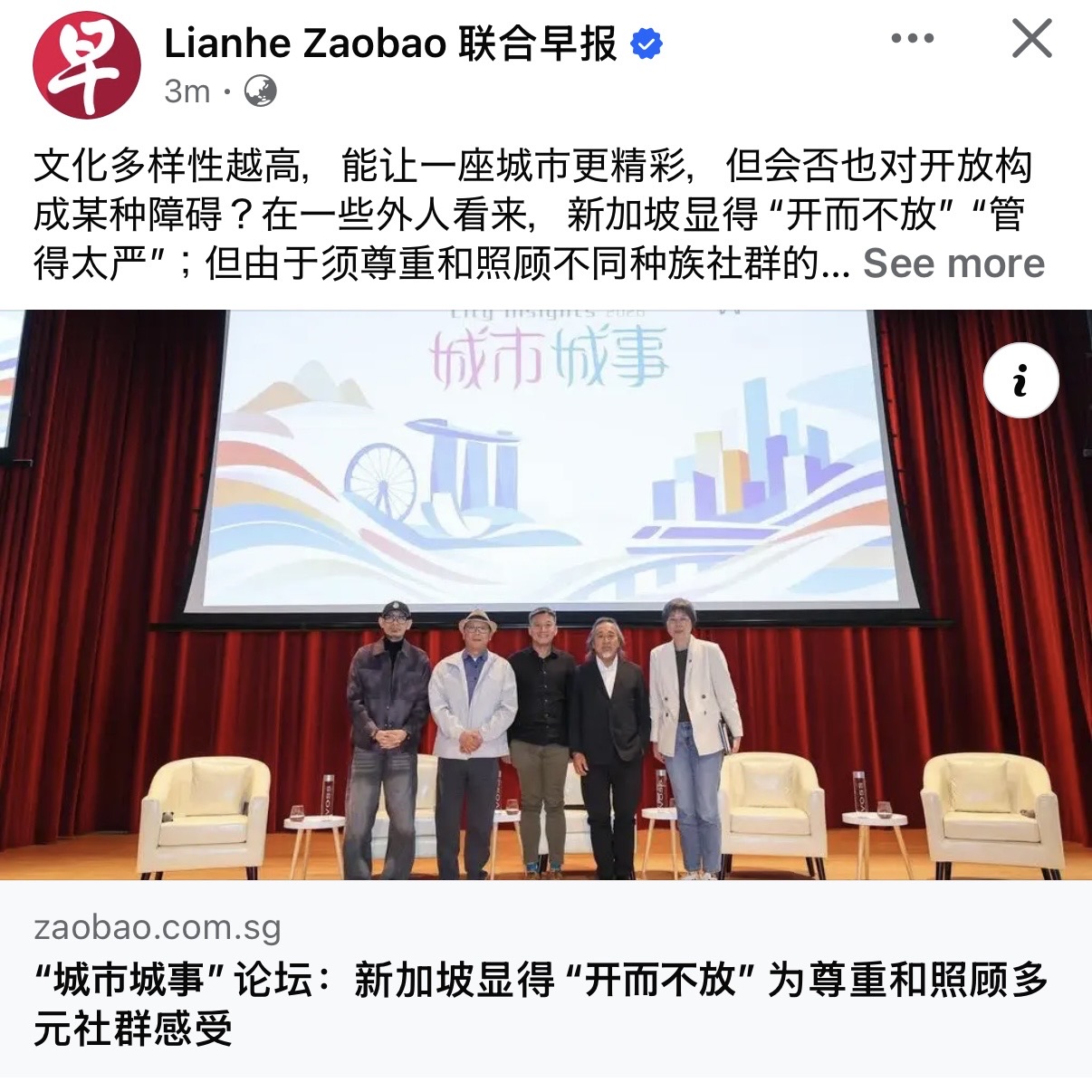
Recently, I was invited by Lianhe Zaobao 联合早报 (Singapore’s venerable Chinese-language daily) to be one of four featured keynotes in their inaugural 城市城事文化论坛 CITY INSIGHTS Cultural Forum. I was very excited to be part of this, given my life-long interest in cities and urban life.
I was also moved and honoured to be invited – the other three speakers were cultural scene greats from Kuala Lumpur, Shanghai and Taipei. One of them, Taiwanese architect, Kris Yao, was someone whose work and creative philosophy I truly respected – so it was an absolute treat being part of this cohort.
My keynote was an opportunity for me to finally share 100 Ways To See… A Street, a visual art + photography + urbanism project I completed in 2012 in New York, but which I’d never really had a chance to speak publicly about.
I’d decided to speak about this project because it had a long-lasting influence on all my later work: photographing + writing portraits of Asia’s port cities, naturally; but also how I re-imagined the Asian Civilisations Museum and Peranakan Museum as their director, later on.
I translated the title “100 Ways to See… A Street” into 百看不厌: 一条街.
The idiom, 百看不厌 bǎi kàn bú yàn, serves as poetic evocation of “100 Ways To See”. Often used to describe an object, a spot of scenery, or a person, it refers to exceptional beauty; beauty so great that one could “gaze upon the object 100 times (百看 bǎi kàn) and not get tired of it (不厌 bú yàn).”
I thought I’d share my lecture, albeit briefly, as it responds to the theme I’d hoped to explore for this penultimate post of my “begin again” journey.
Admittedly, I’d also delayed this post because I already knew (in January) I was going to publicly speak on this subject (in May). I thought I’d kill two birds with one stone.
* * *
“Spirit of the City” can mean multiple things. The equivalent word for “spirit” in Chinese is jīng shén 精神. The same in Malay is semangat.
In all three languages, “spirit” refers to that which is ephemeral and pertaining to a sort of innate outpouring of energy. It is frequently used also in relation to human endeavour, as an expression of resilience and indomitable will, e.g. “the human spirit”.
“Spirit/精神/semangat” also has a supernatural connotation, literally referring to otherworldly being(s) that inhabit a material shell: a place or an object. In European and East Asian tradition, for example, there is the notion of the “spirit of the forest” – a mythical being that represents Nature itself and who protects the denizens of the verdant deep.
When used in relation to a city, however, the meaning of “spirit” is far more complex.
The spirit of a city could refer to its pulse: the ebb and flow of daily human activity. It could describe its essence or identity: that which makes it what it is. It is almost certainly associated with history, heritage and memory.
I prefer to define a city’s “spirit” as its creative energy: a palpable manifestation of the boundless imagination and creativity of city dwellers.
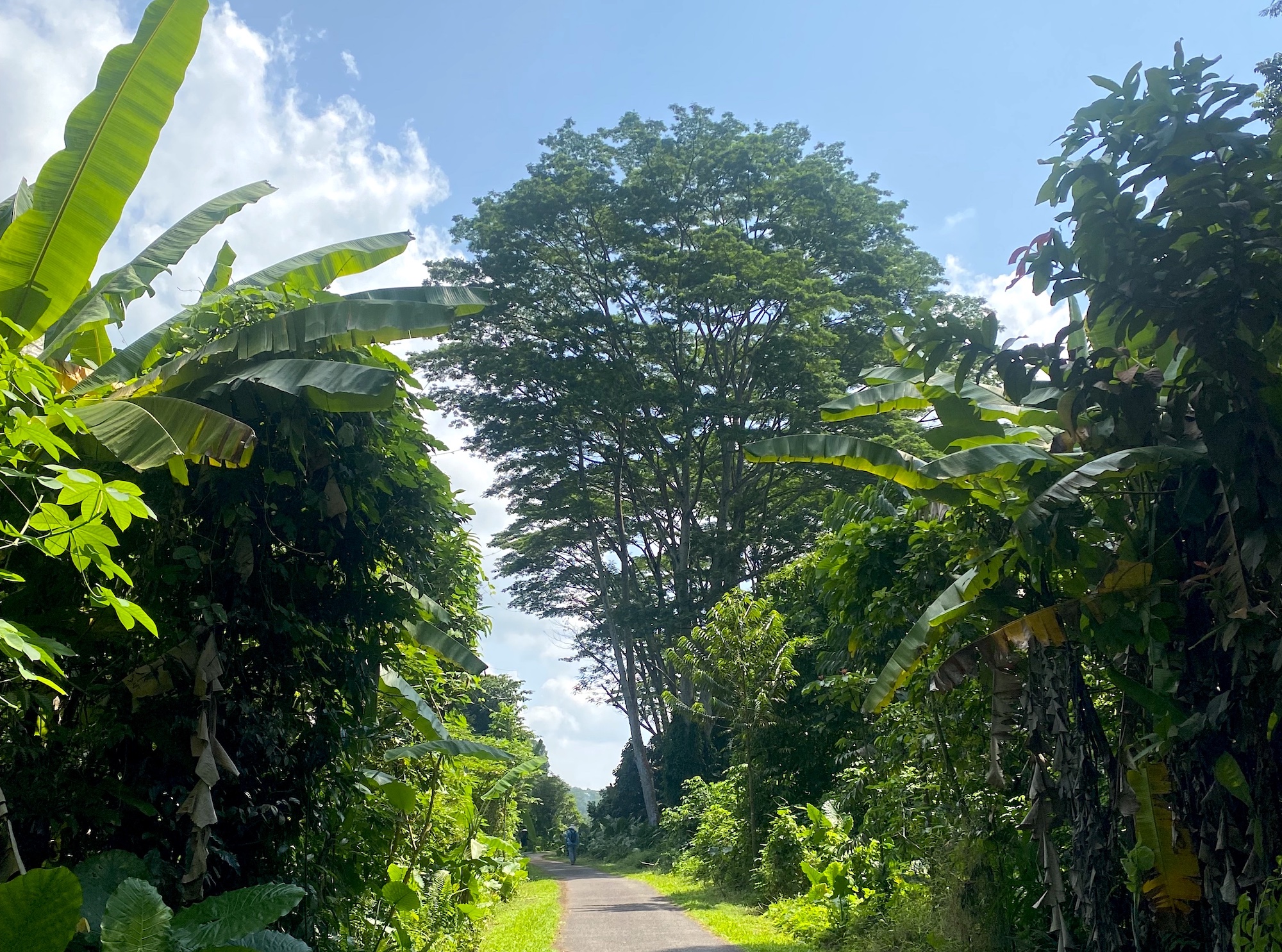
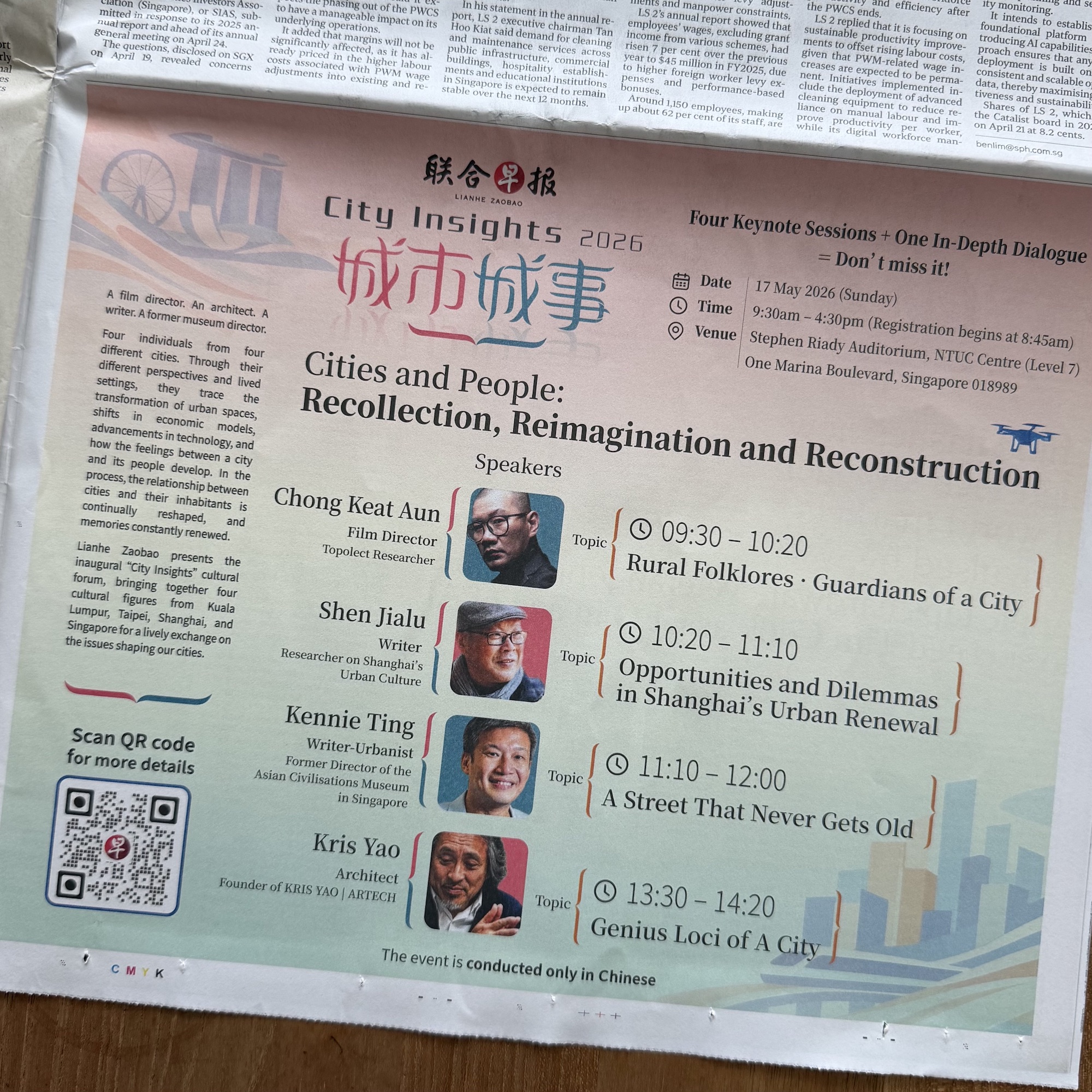
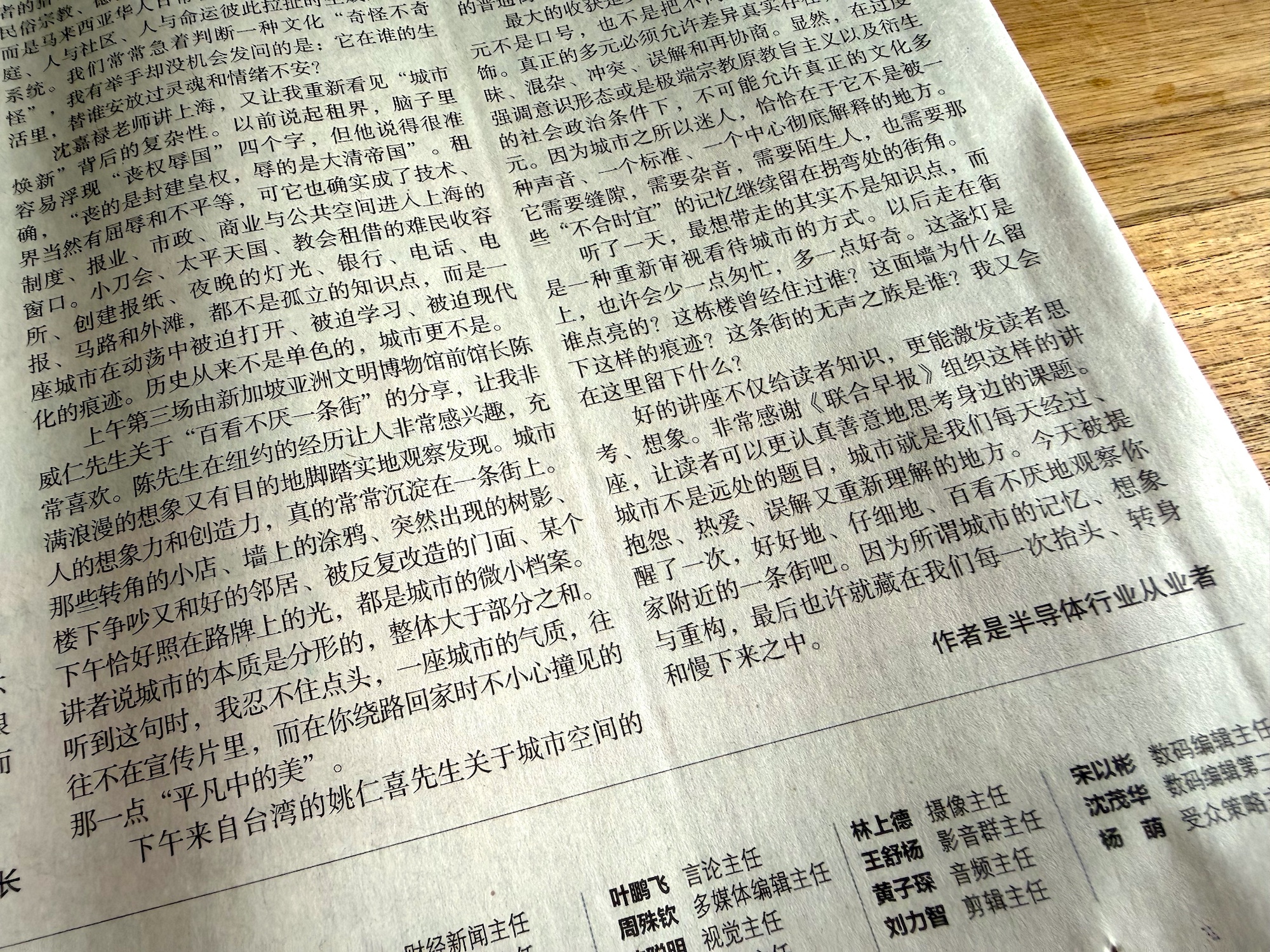
* * *
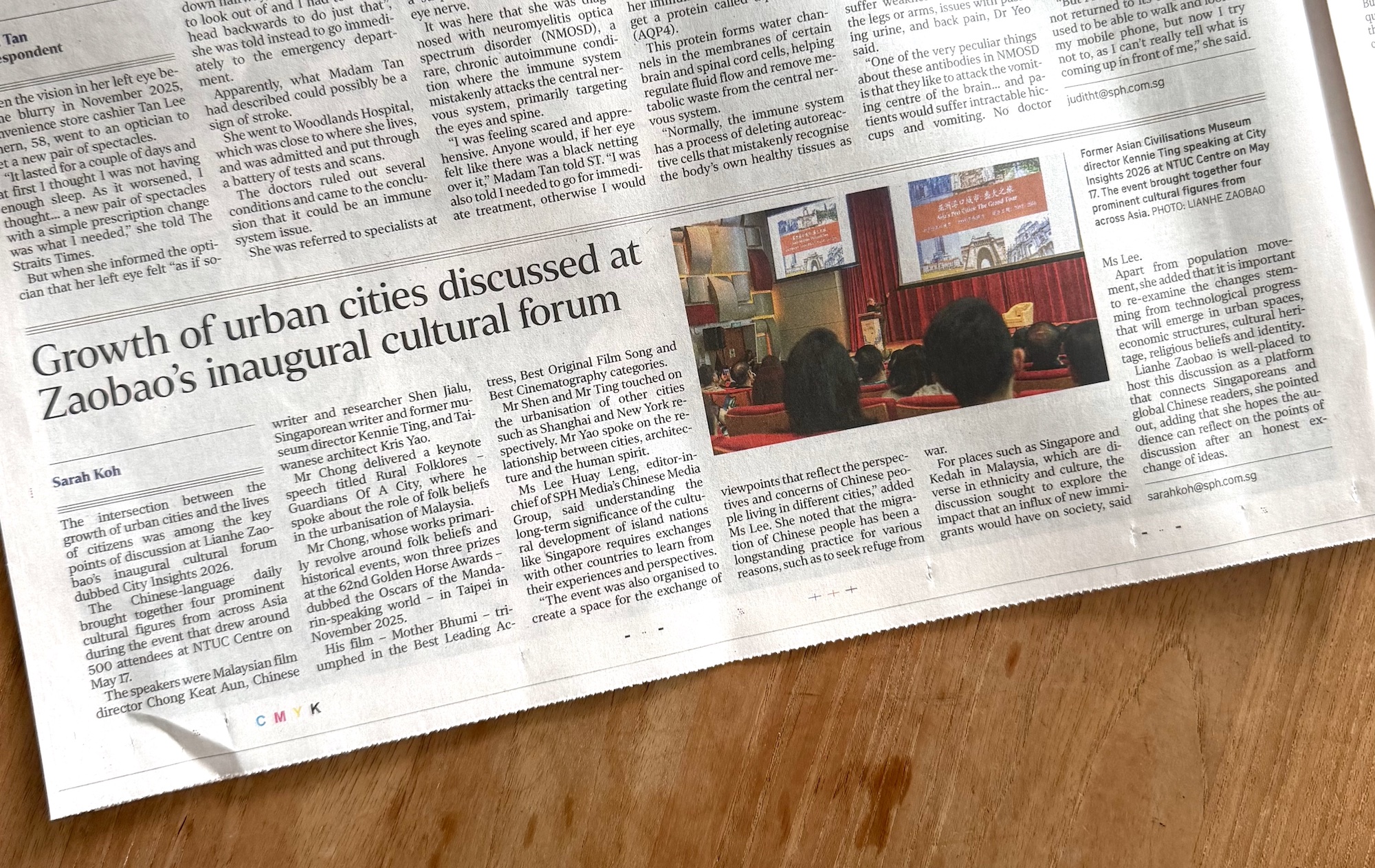
The theme for the CITY INSIGHTS Cultural Forum (on 17 May 2026) was “Cities and People: Recollection, Reimagination and Reconstruction 城市与人:记忆,想象与重构”.
My lecture that day was split into two parts. The first part saw me deconstruct the city of New York by way of a single street – after all, to reconstruct a city, one must first deconstruct it.
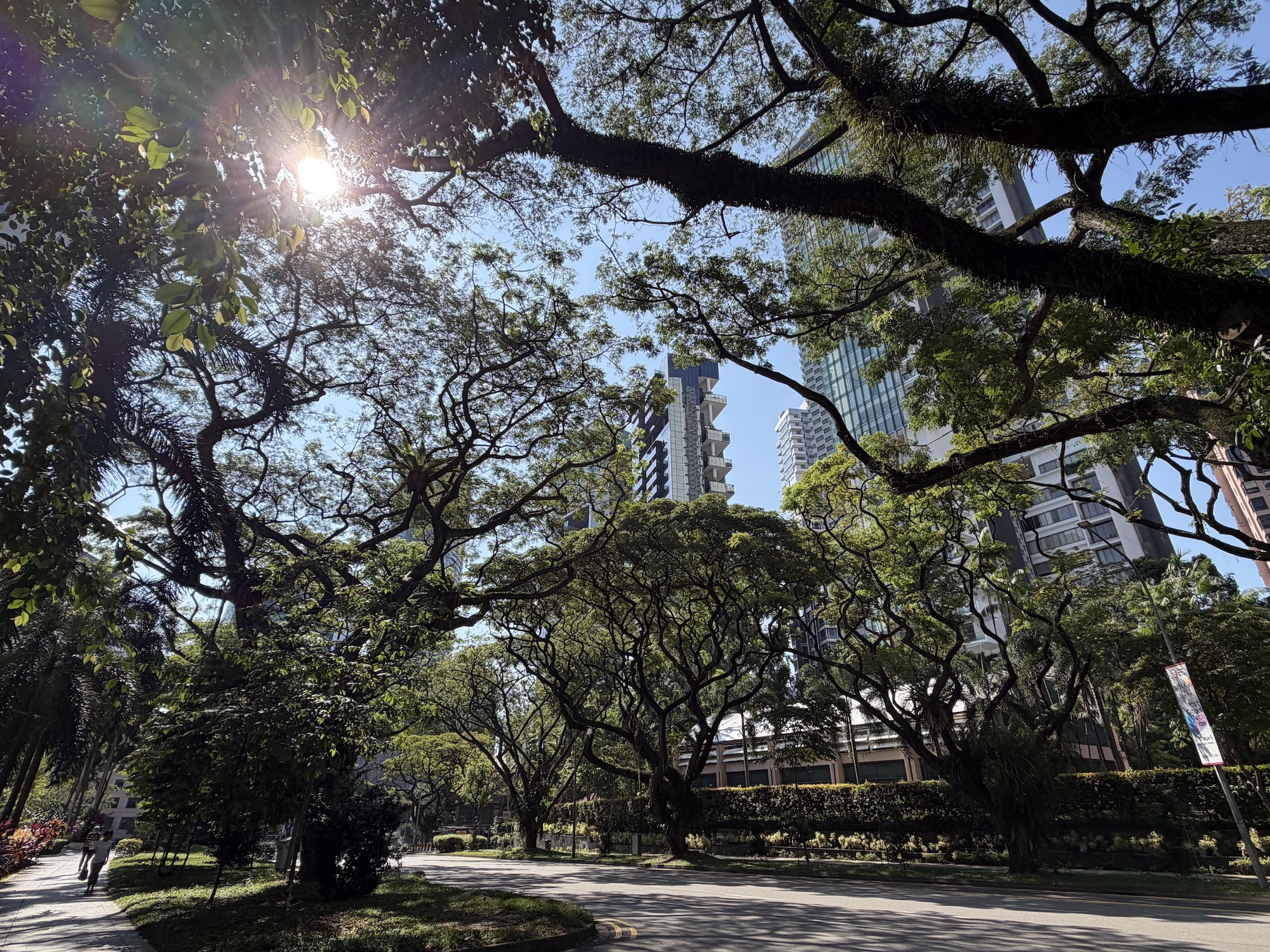
The street in question was WYTHE AVENUE in Williamsburg, on which I happened to live while briefly sojourning in NYC in 2011/12. It was a seemingly mundane, nondescript sort of street that cut through a part of Brooklyn that was rapidly (and famously) gentrifying.
I thought it fascinating in its detail – full of complexity and constantly changing. Every couple of days, I’d walk 15 blocks to my favourite supermarket to buy groceries. One day, I thought: why not attempt to photograph and document the change and complexity on this street where I lived.
Thus, 100 Ways To See… A Street was born, so called because it saw me “seeing” the street with my camera, from 100 different perspectives. This would become an experimental art project that blended street photography, digital media and urban studies.
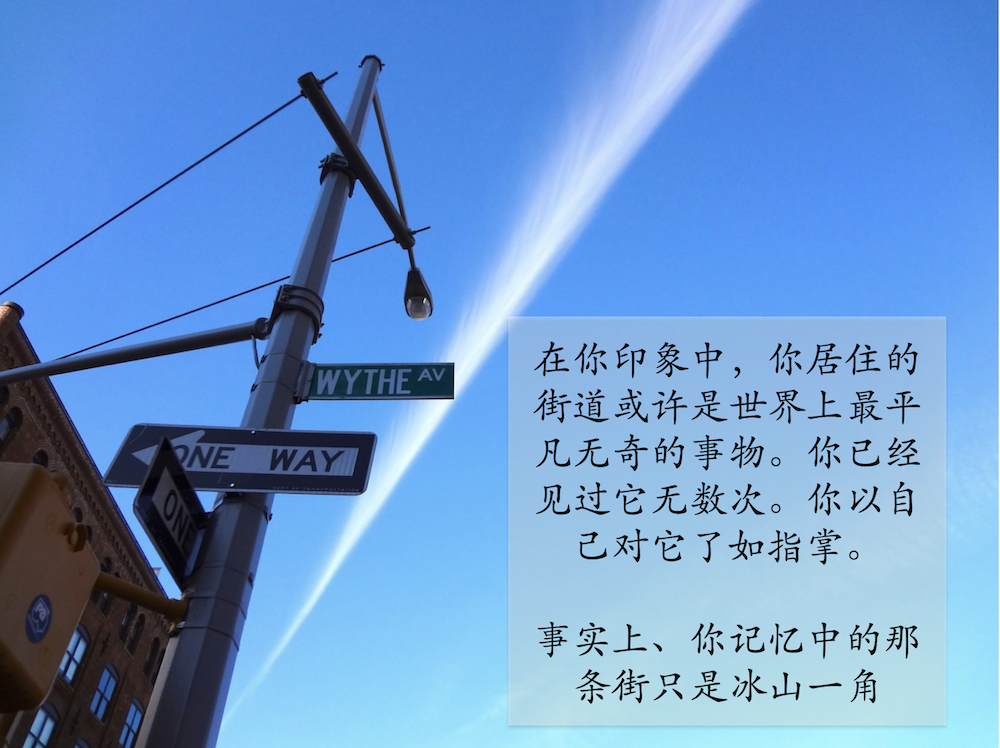
Each time I walked Wythe Avenue, I would choose a theme: which could either be a tangible, essential and often overlooked component of the street; or a somewhat more abstract concept.
With my camera, I would then take some 10 – 21 photos on the theme. These I would upload online on WordPress, in the format of a Visual Blog (in 2012, believe it or not, Instagram hadn’t yet been invented!)
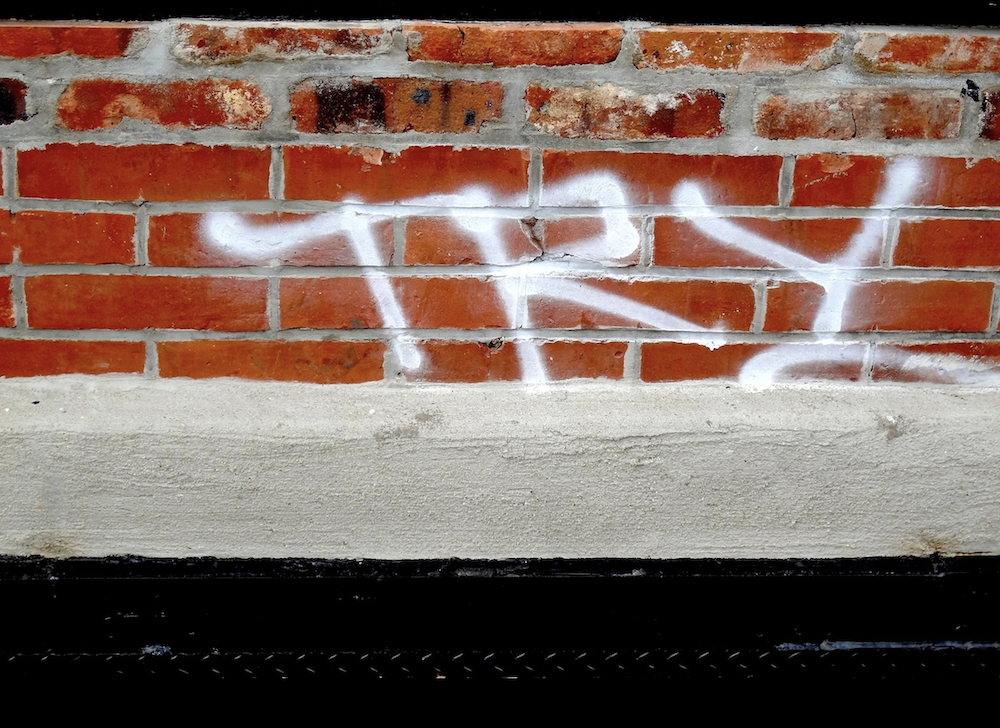
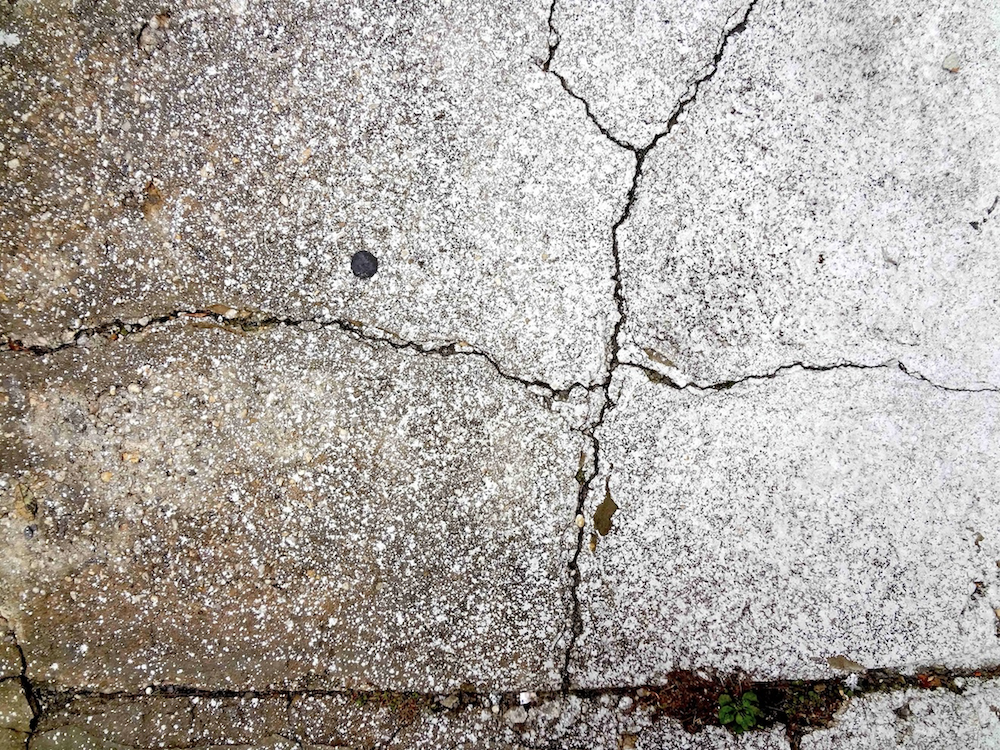
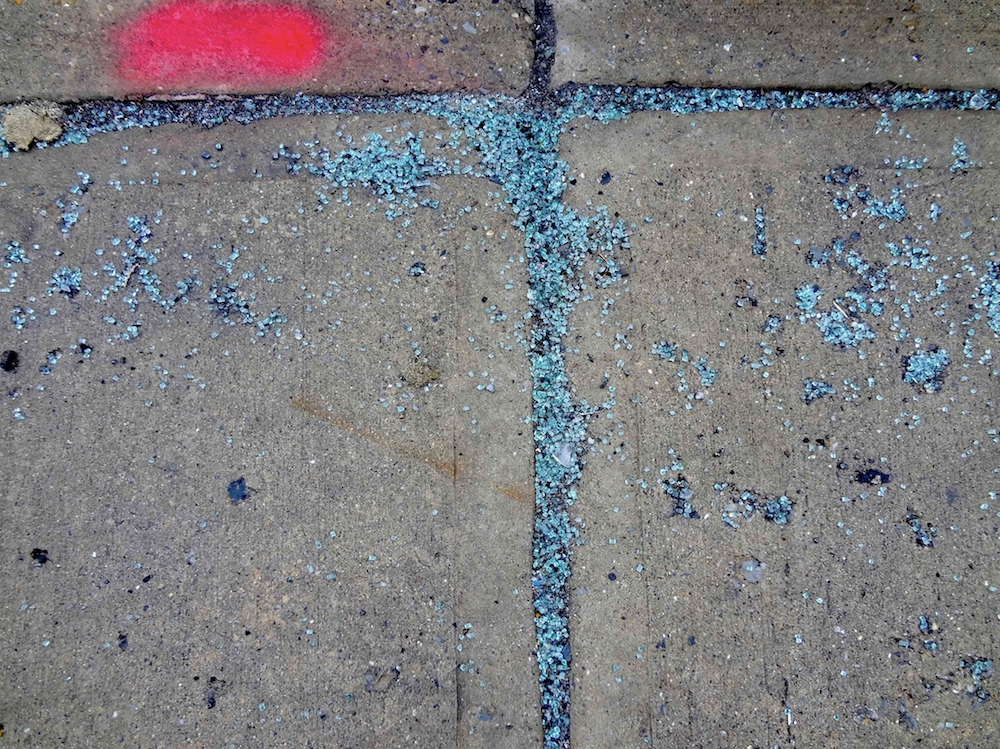
Theme #1, for example, was PAVEMENT. Thus, I doggedly shot some 20-odd views of the pavement under my feet, suffering myself to be pleasantly surprised by the ART cached therein. I include a few of these views here.

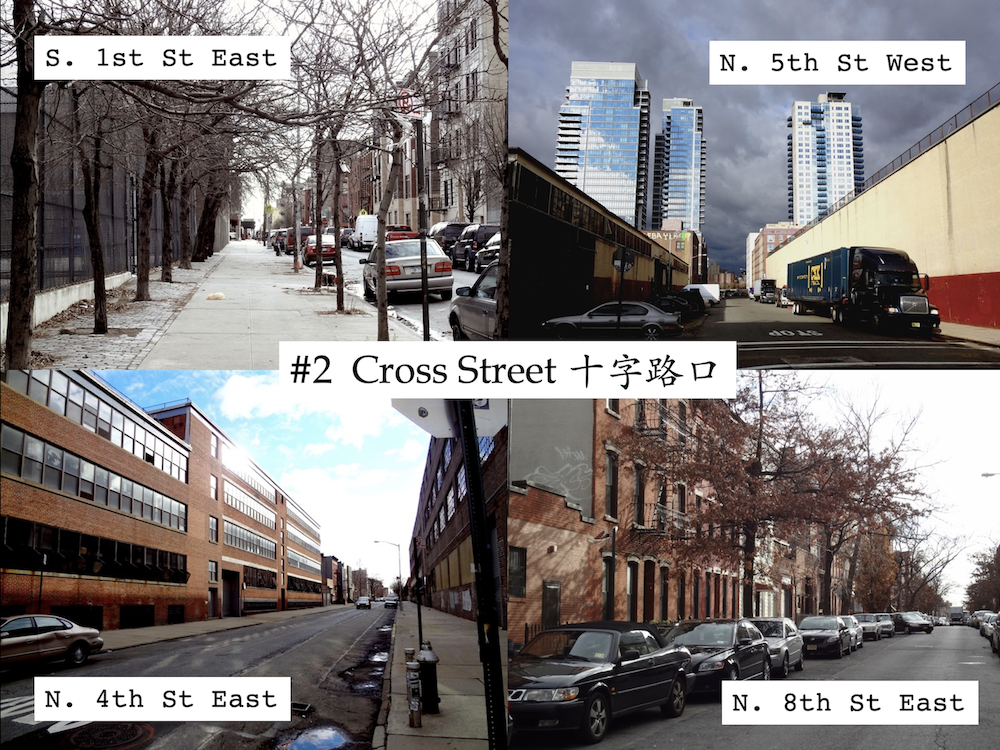
Theme #2 was CROSS STREET – so I dutifully shot views down every single cross street along Wythe Ave.
Theme #3 was UNIT NUMBER – so I peered at apartment blocks and house numbers like a stalker, delighted by the great diversity in design and typography.
Themes #4 and #5 took in FACES on the street, plastered on street lamps, postboxes, scaffolding, etc, and representing the full gamut of human emotions.
Theme #6 saw me take on an abstract concept: BROKEN.
And so on and so forth till I hit Theme #100, by which time I had taken and uploaded more than 2000 photos of a single street, and fully indulged my clearly-obvious obsessive-compulsive streak.
100 WAYS TO SEE… A STREET is still online, so the reader may explore it at their own leisure here: www.100waystosee.com.
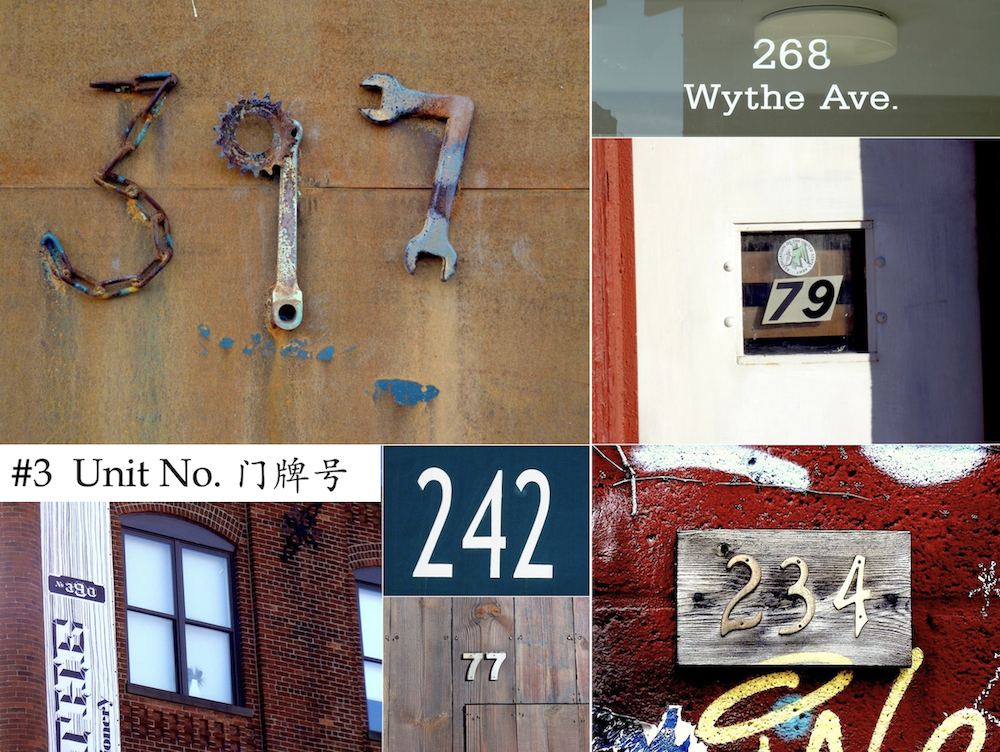
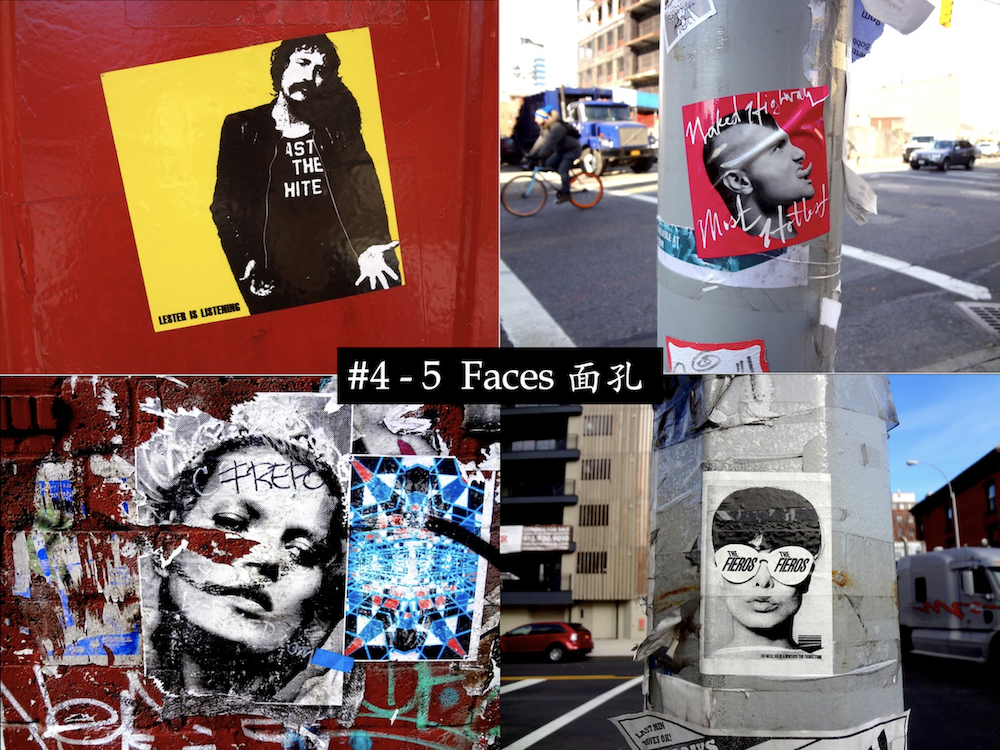
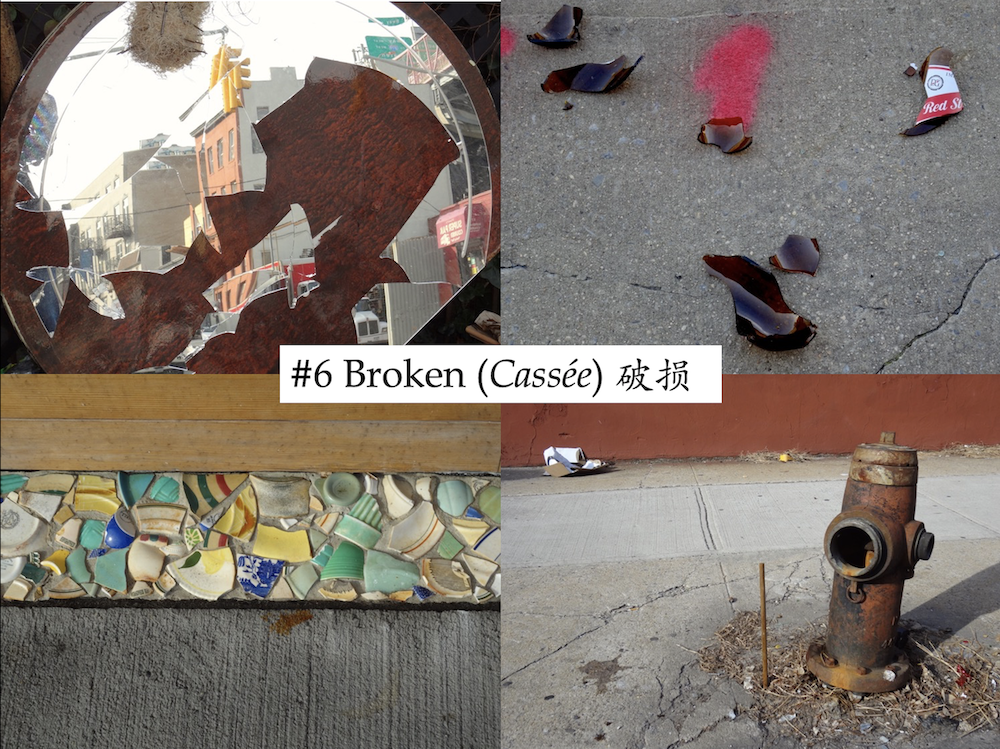
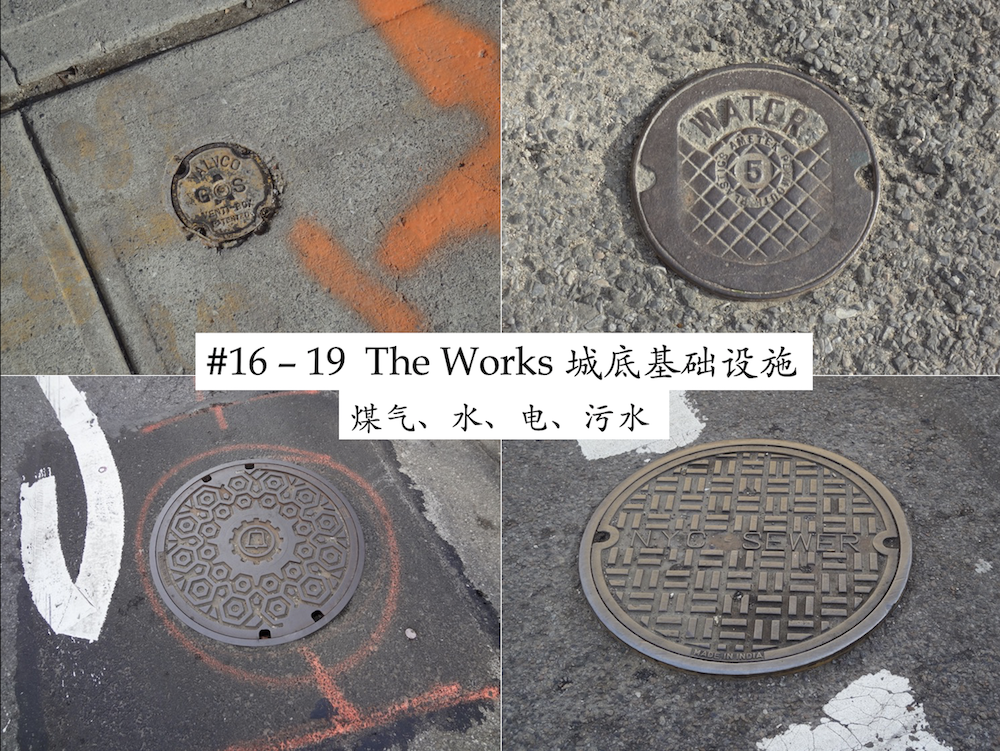
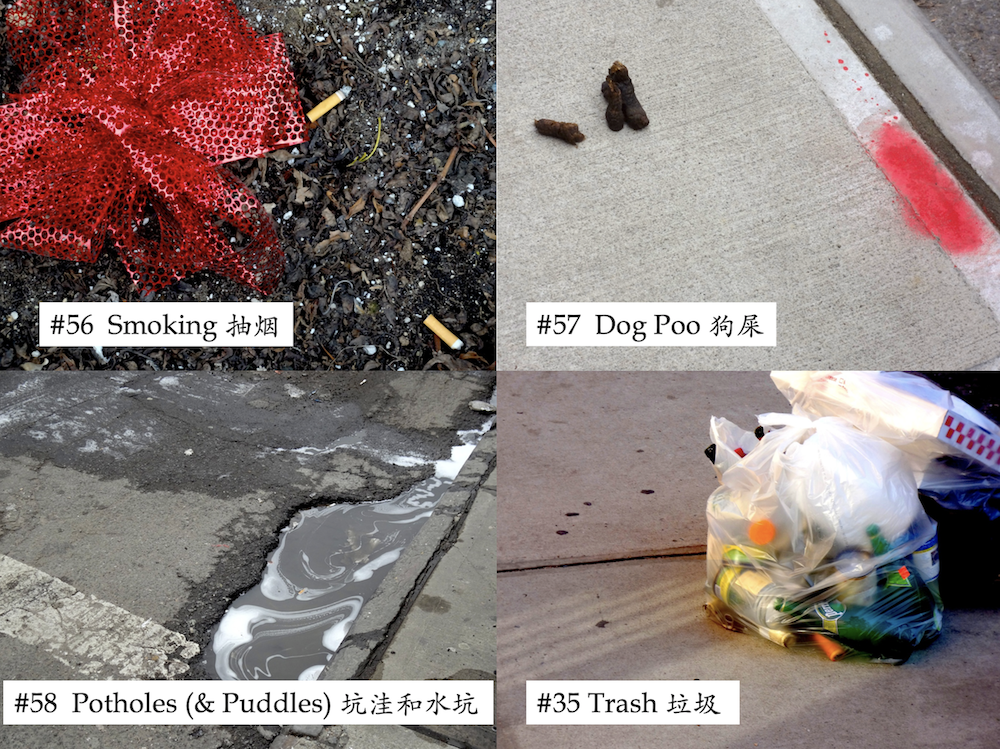
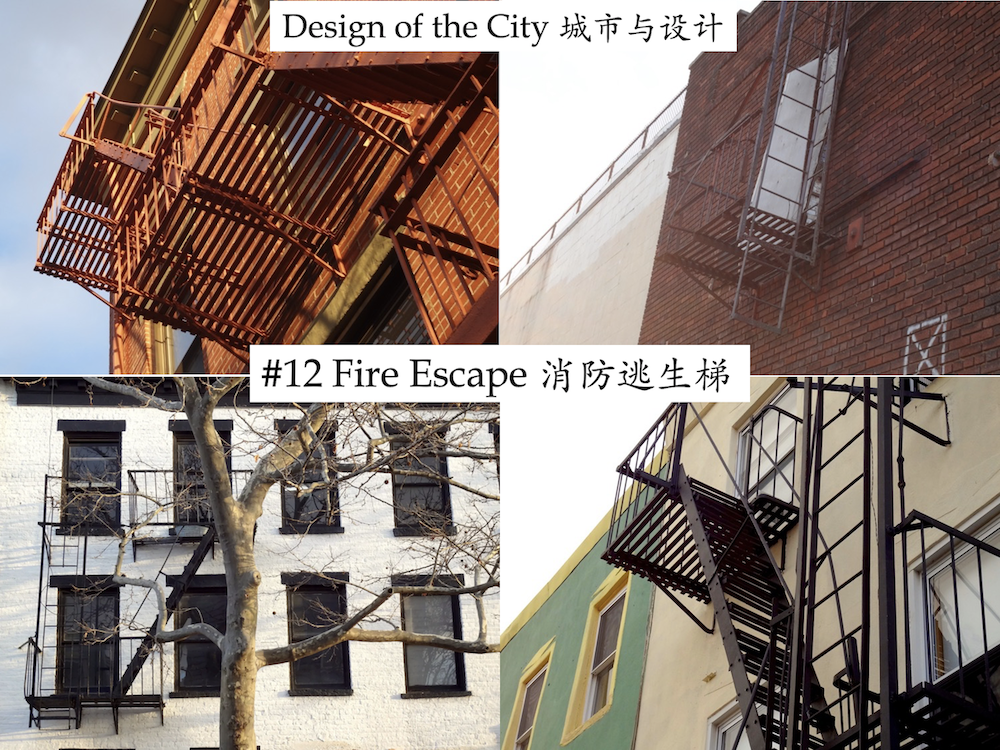
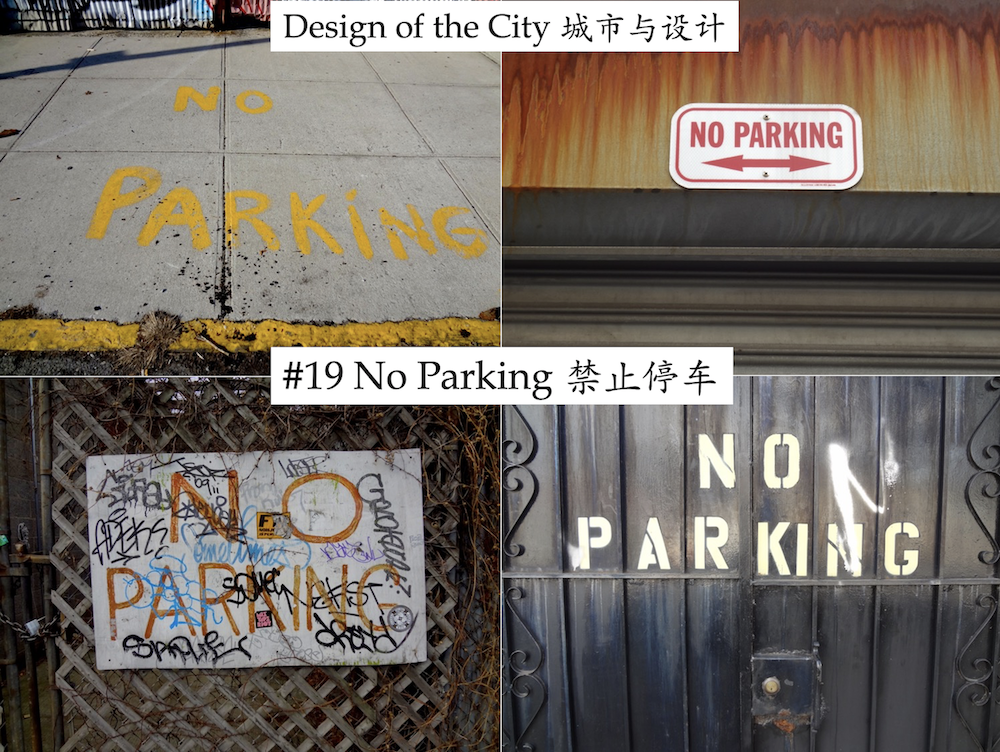
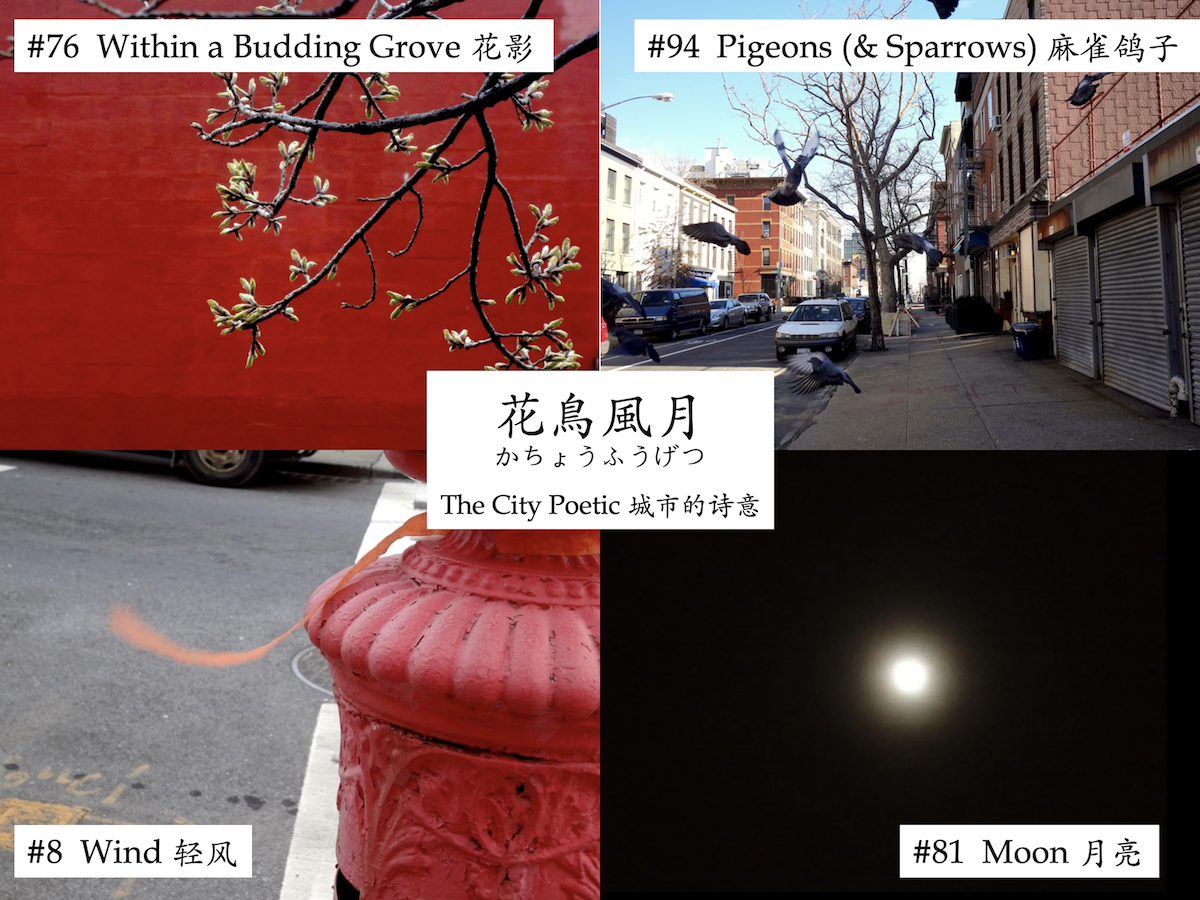
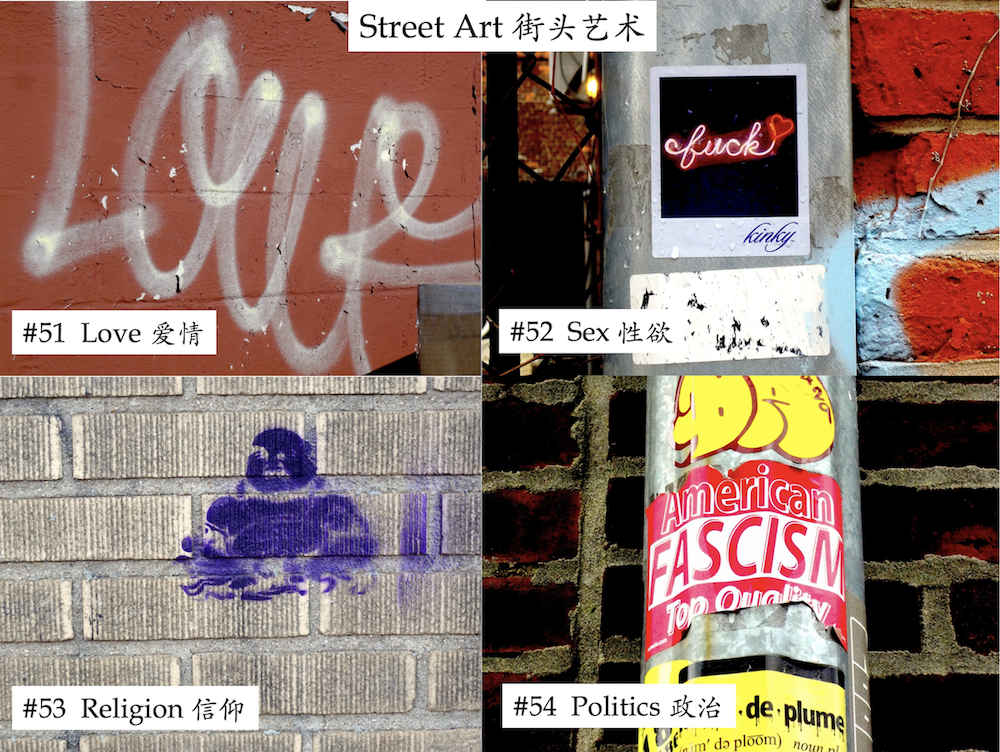
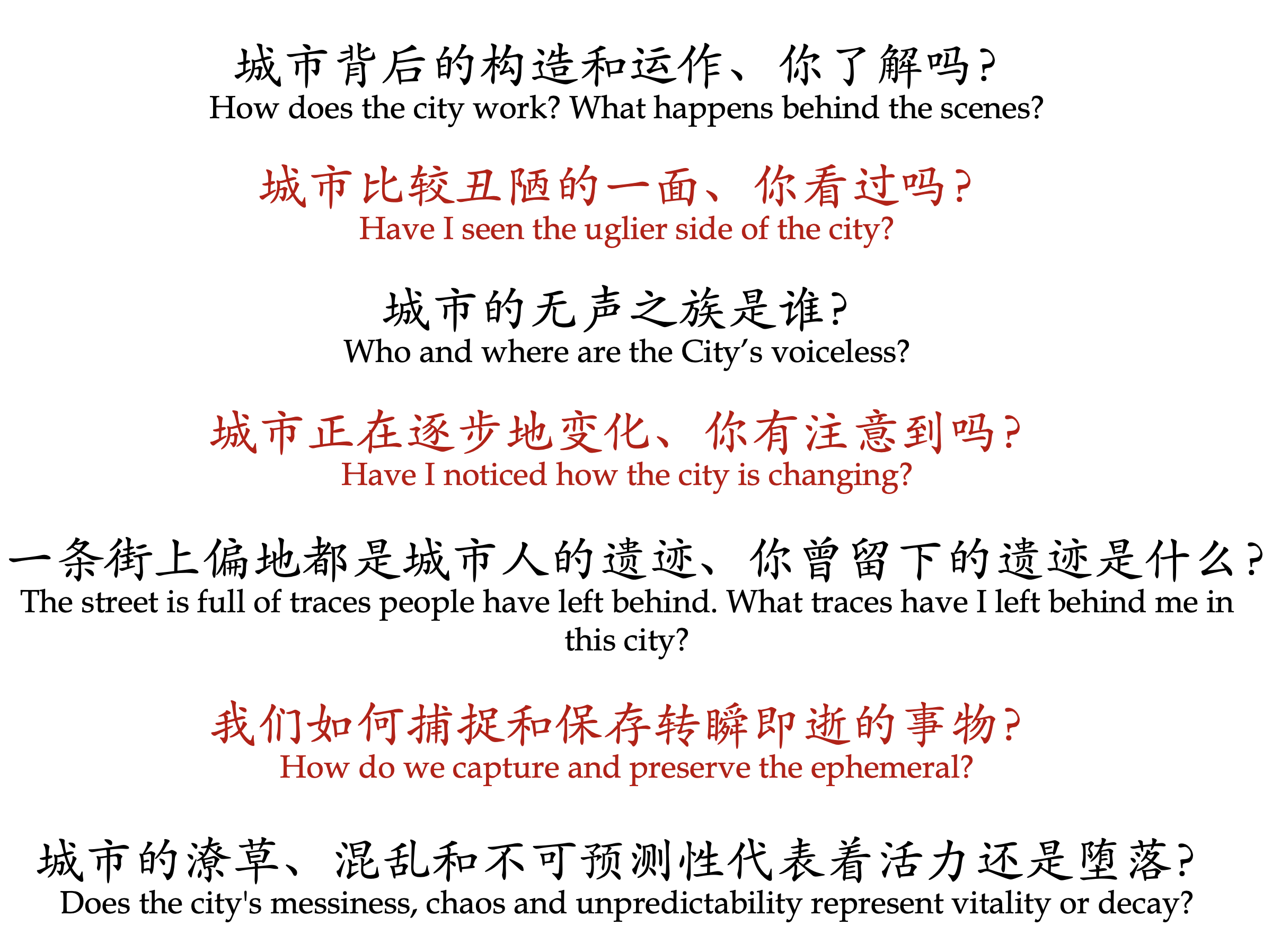
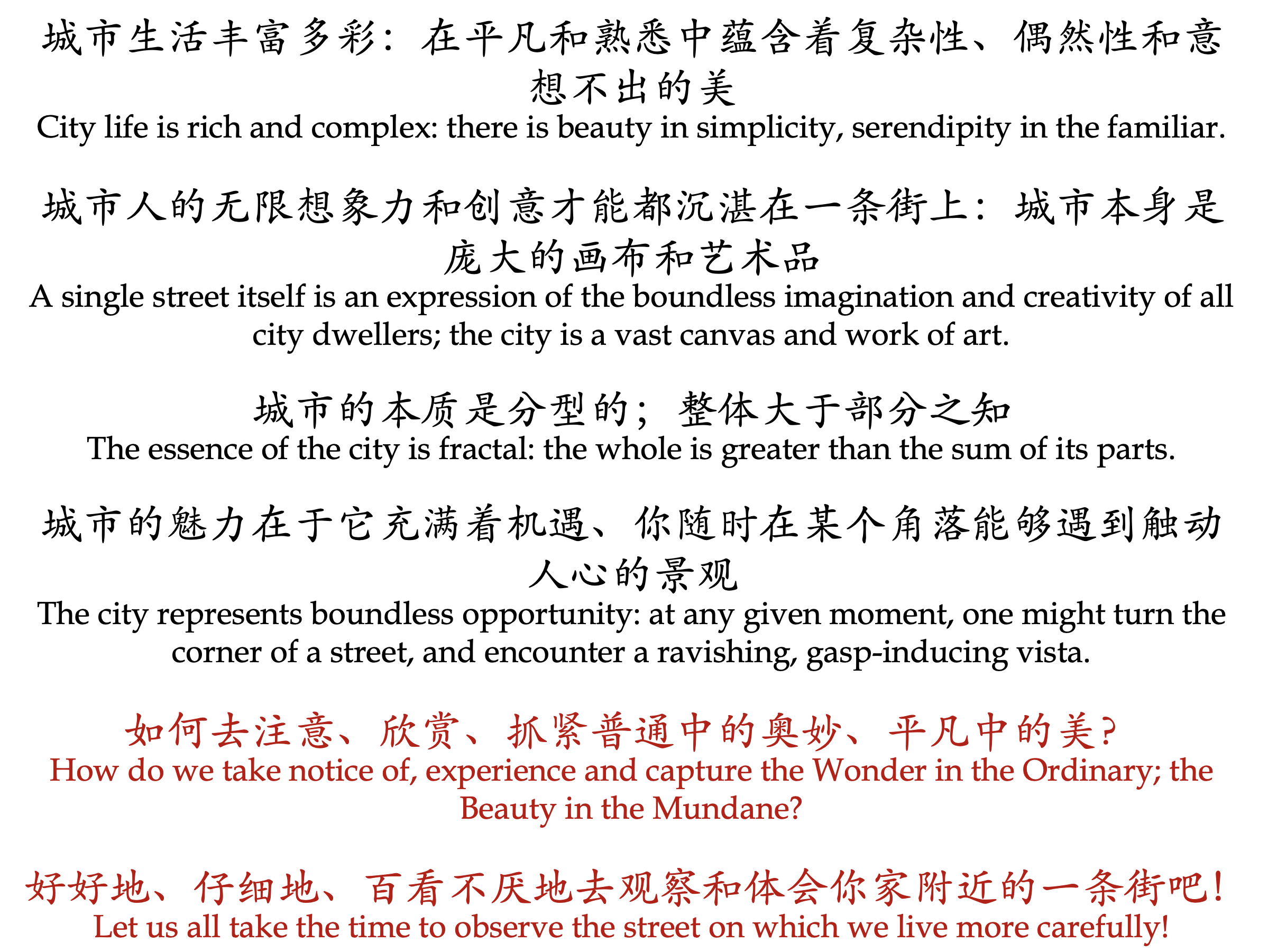
My intent in willfully dissecting and taking apart Wythe Avenue was not only to demonstrate that there was beauty, serendipity and complexity in the mundane and familiar, but also – more importantly – to hope to try to encounter New York’s ebullient “city spirit” 城市精神.
Sifting through the 2000-something deconstructed “parts of the whole”, I felt I could come to some sort of a shadow of a conclusion as to what this spirit felt like…
Chiefly that it was dynamic, euphoric and resilient; a street spirit: democratic, authentic, raw. It was unbridled, unrestrained, constantly evolving.
More importantly, it was clear to me that New York’s “spirit” was expressed by way of the infinite creativity and imagination of its citi-zens. It was a heady, miasmic concentration of millions of individual dreams, aspirations and desires.
This much dreaming and aspiring concentrated in one place can only mean one thing: that the CITY was a metaphor for BOUNDLESS POSSIBILITY. After all, at any given moment, one might turn a corner on a seemingly ordinary street, only to encounter some small thing/view/vista of great beauty and immensity.
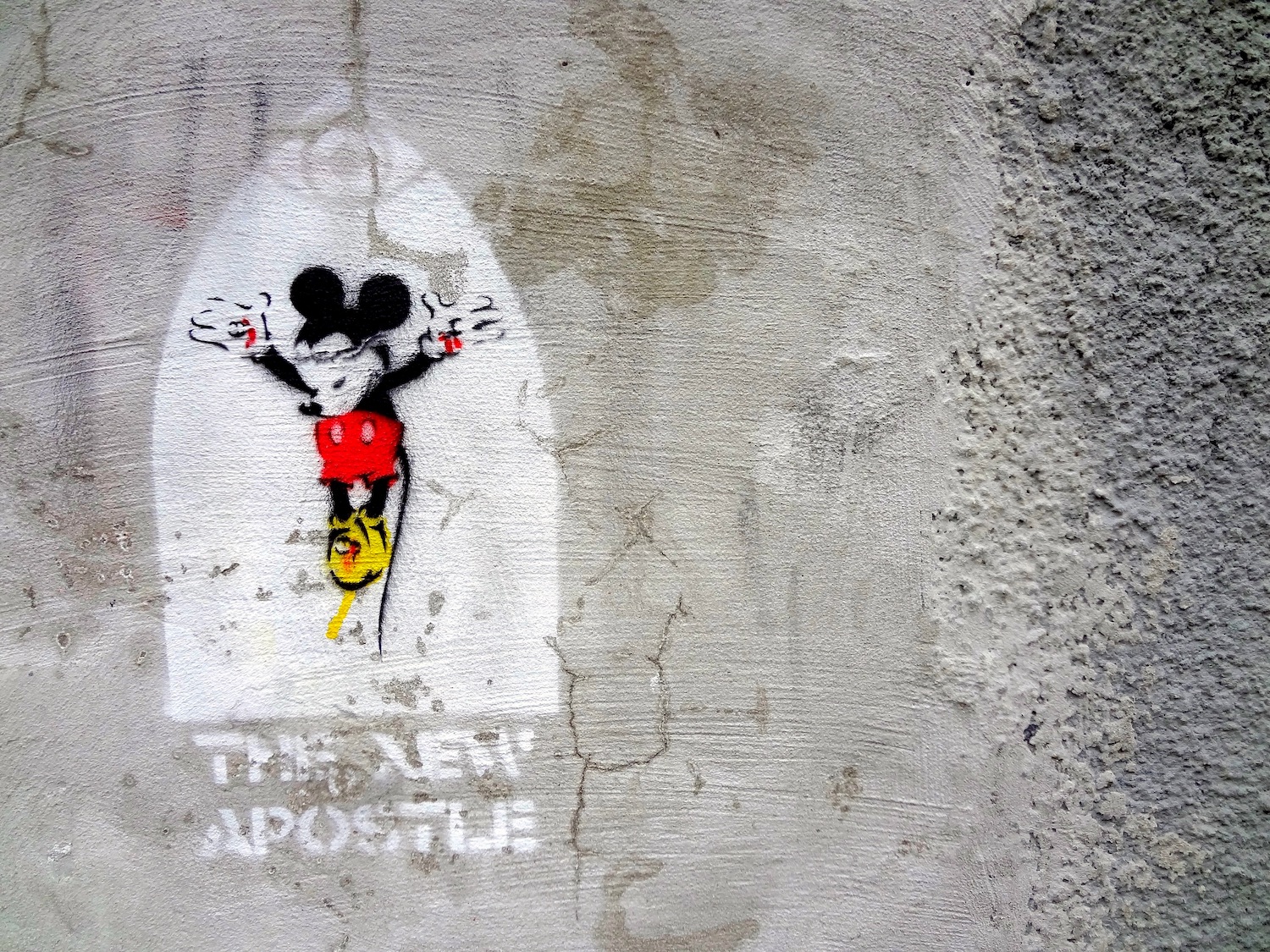
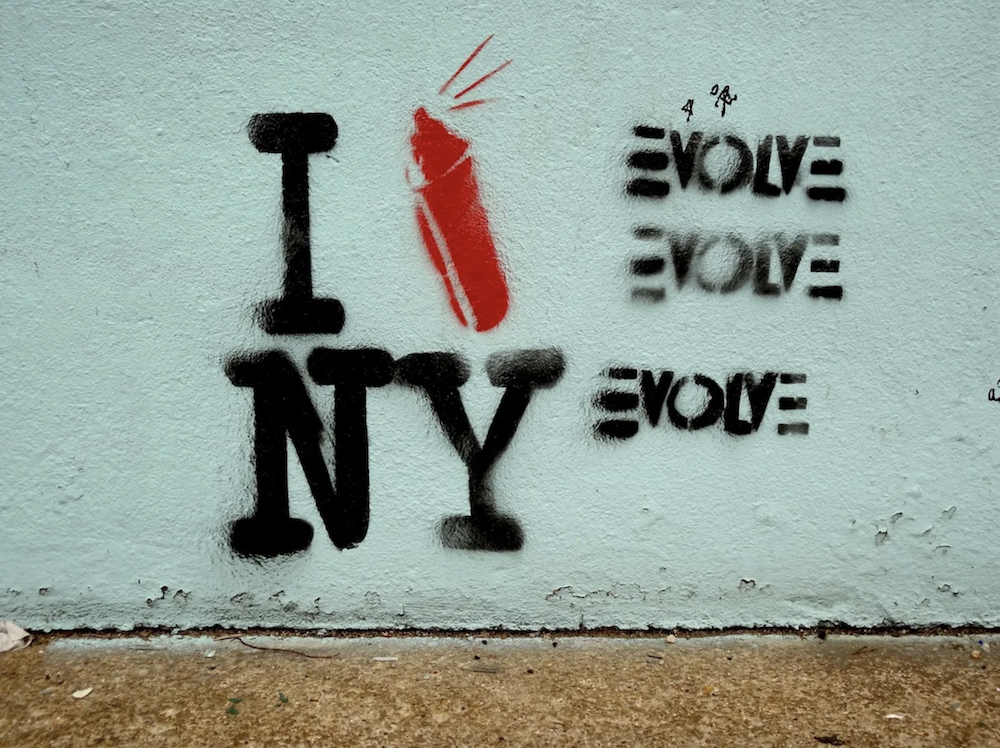

* * *
The logical “Part II” of my presentation should’ve seen me applying 100 Ways To See to a single street here in Singapore.
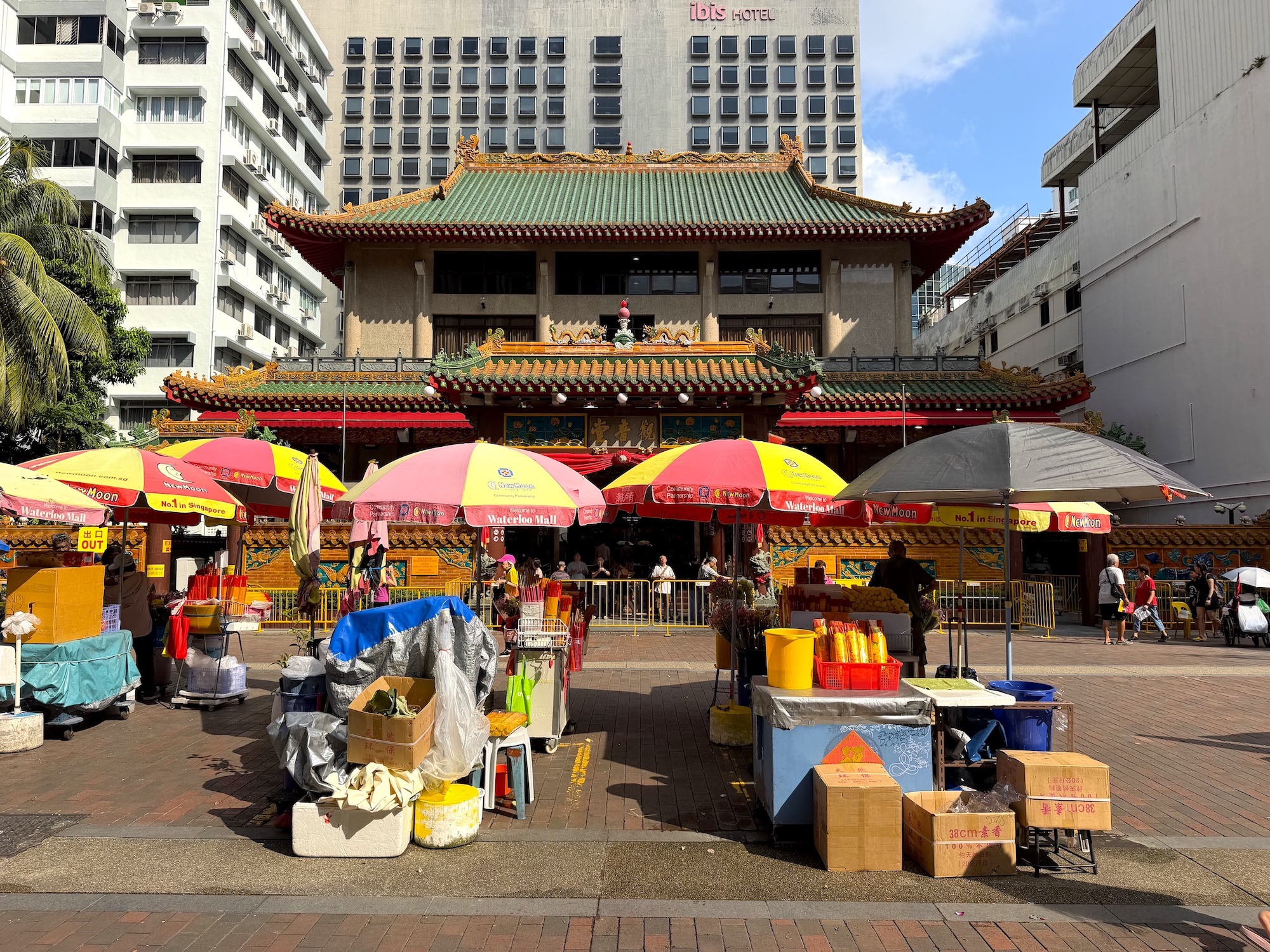
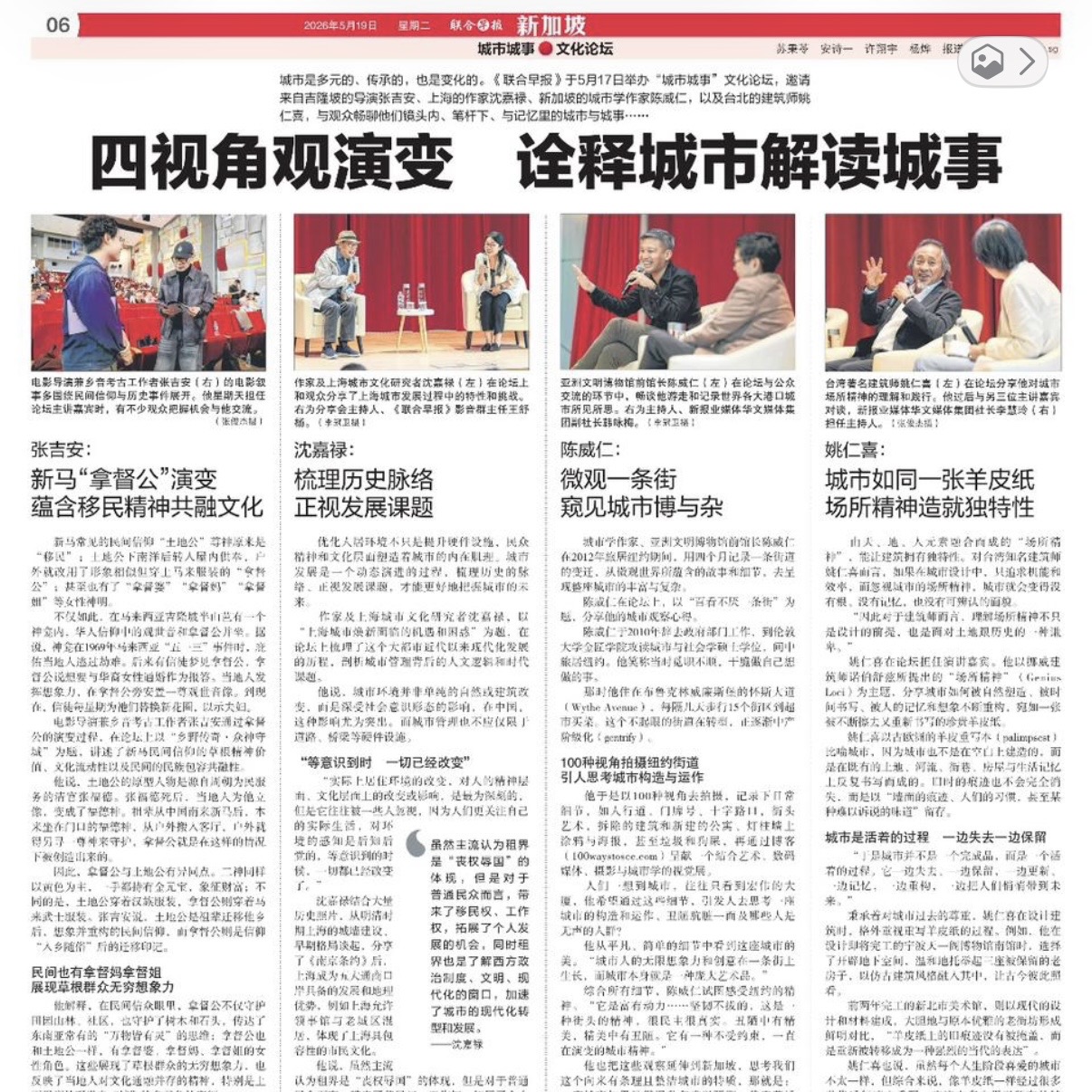
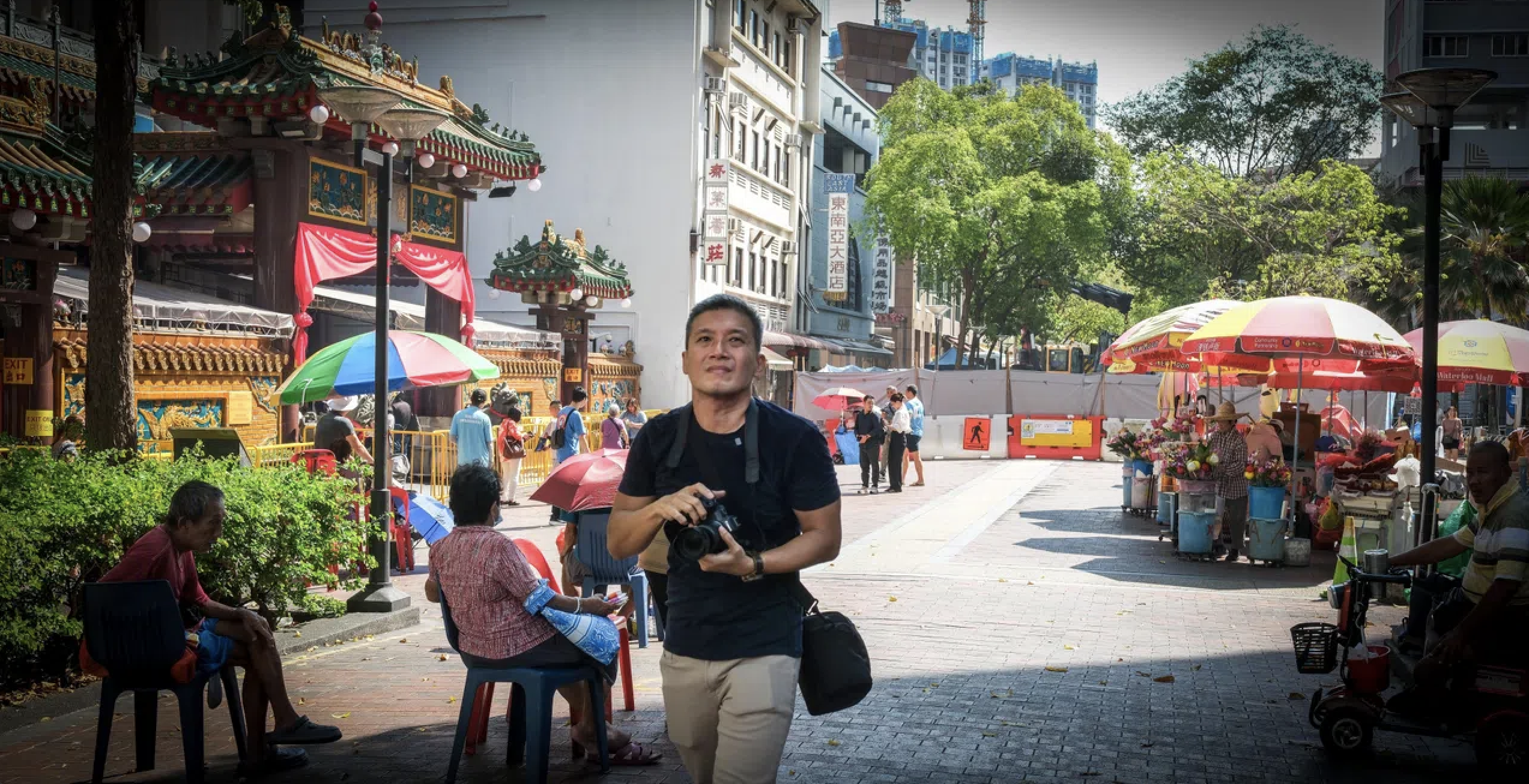
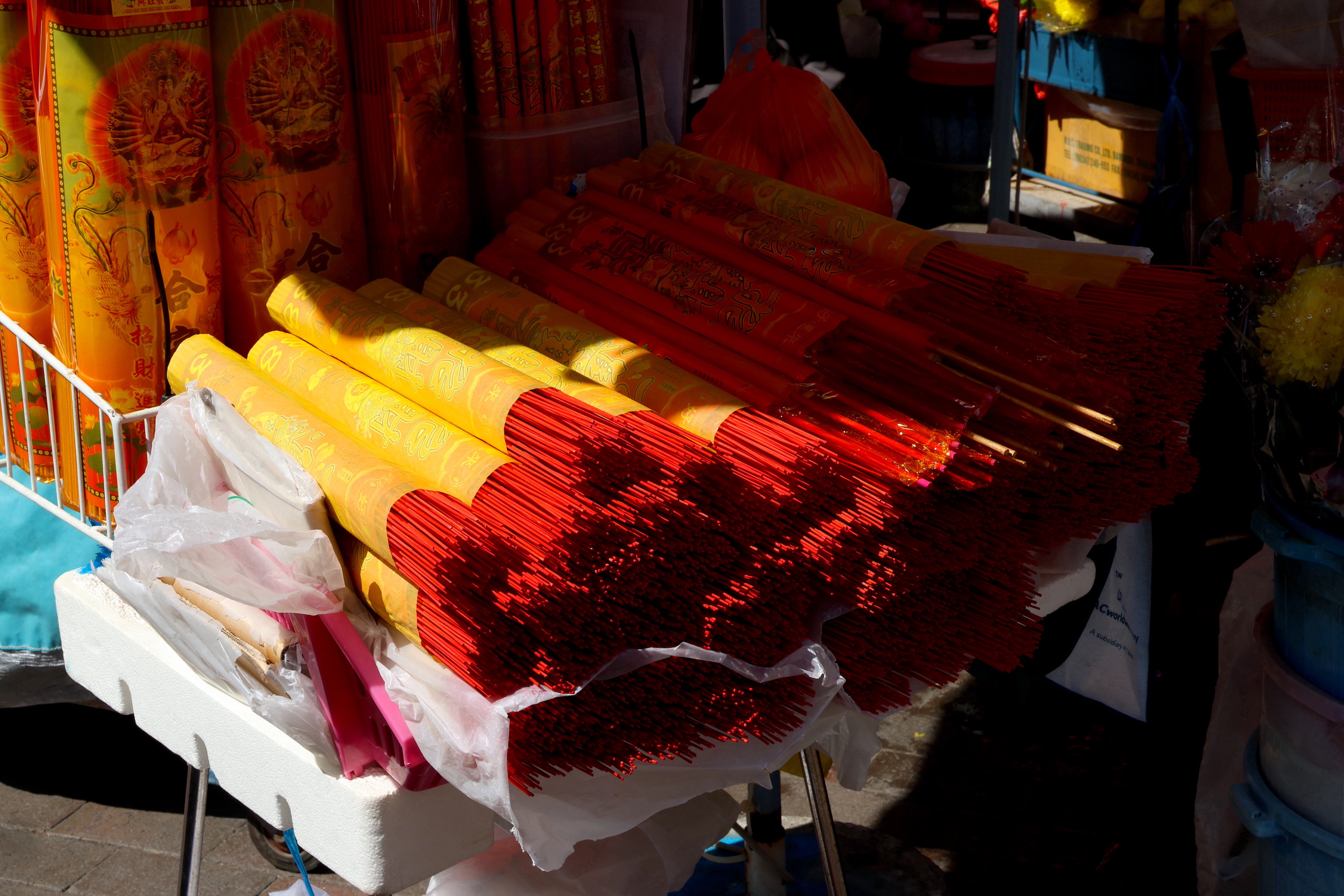
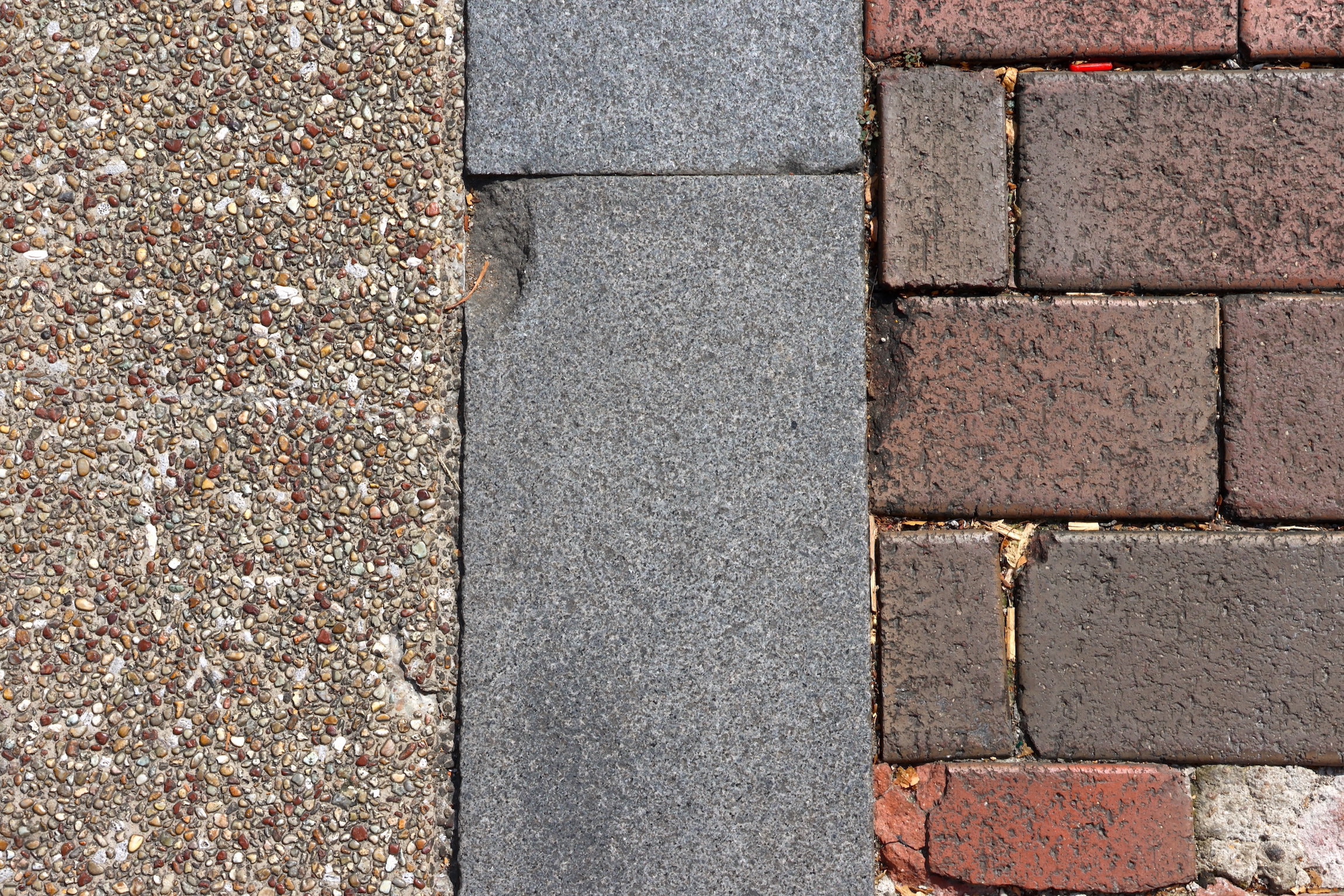
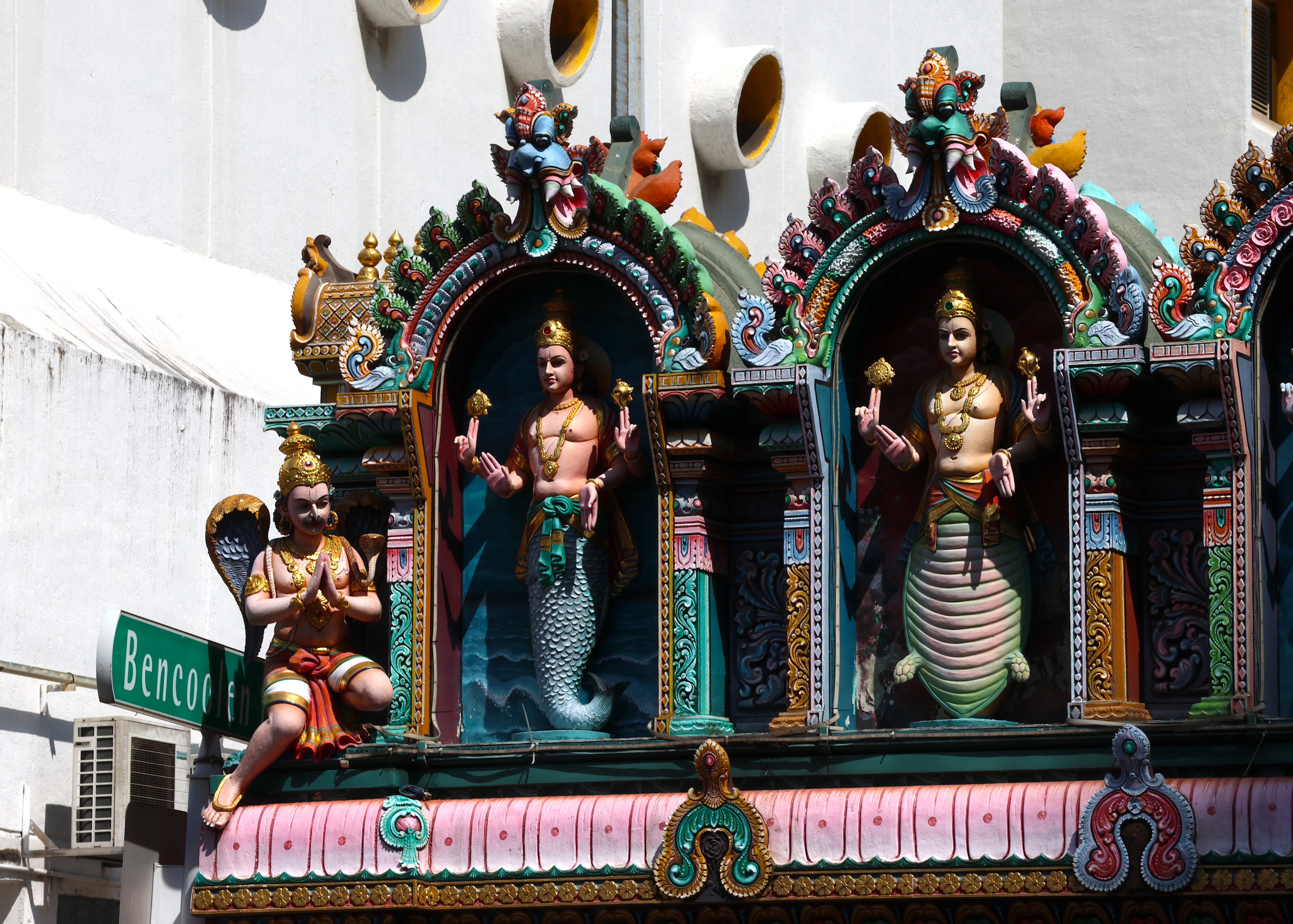
In an interview to promote the CITY INSIGHTS Cultural Forum, Lianhe Zaobao had me doing just that. The street I picked was Waterloo Street, one of my favourites, and also one of the most complex and historically-rich thoroughfares in the city centre.
In the course of one hot, sweltering morning, Zaobao journalists had me shooting the street with my camera while they photographed me. I also played the role of a tour guide of sorts, talking through why this particular street was so fascinating to me.
The shoot manifested as a full-page feature in Zaobao, as well as a 10-min interview online. The digital version of the interview also featured many of my photographs – of port cities, primarily, but also those of Waterloo Street I had shot that morning.
The link is here: https://www.zaobao.com.sg/news/singapore/story20260427-8916429
I loved this feature so much because it perfectly captured the spirit of who I was; depicted me exactly in the manner I saw myself. Here was KENNIE TING: writer-photographer, cultural and urban historian, intrepid wanderer of port cities.
I had never seen my true self on the page, and I was quite moved by the article.
* * *
The actual Part II of my public lecture was very different.
It featured my peregrinations to many Asian port cities to photograph their historic architecture and streetscapes; and subsequent efforts at creatively reconstructing historic urban lived environments in my published books and by way of exhibitions and displays at the Asian Civilisations Museum while I was its Director.
What motivated these peregrinations and efforts at creative reconstruction was interest in better understanding my own identity as a Singaporean. The approach this time might be the antithesis to that in New York – macroscopic, rather than microscopic – but the intent was the same: to attempt to capture the spirit of Singapore.
Between 2012 – 2016, I travelled to some 40-odd cities across Southeast, East and South Asia. I would wander for hours and days along the streets and alleys of the cities’ old towns, searching for moments where the past seeped into the present, and (once again) obsessive-compulsively photographing each and every historic edifice (or striking vista) that came my way.
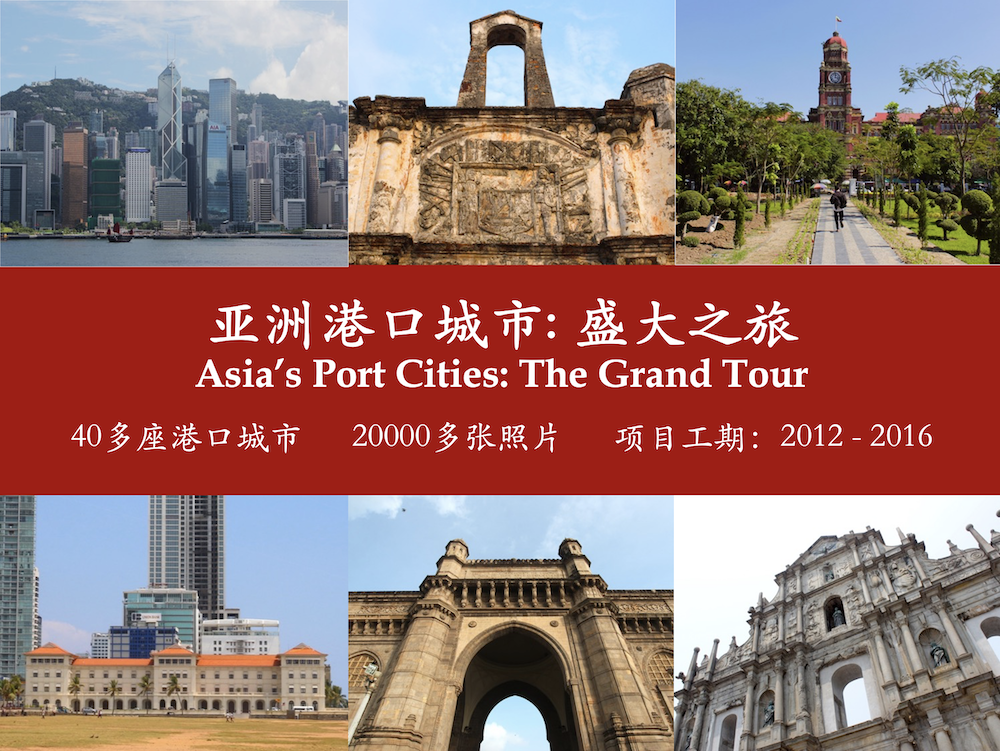

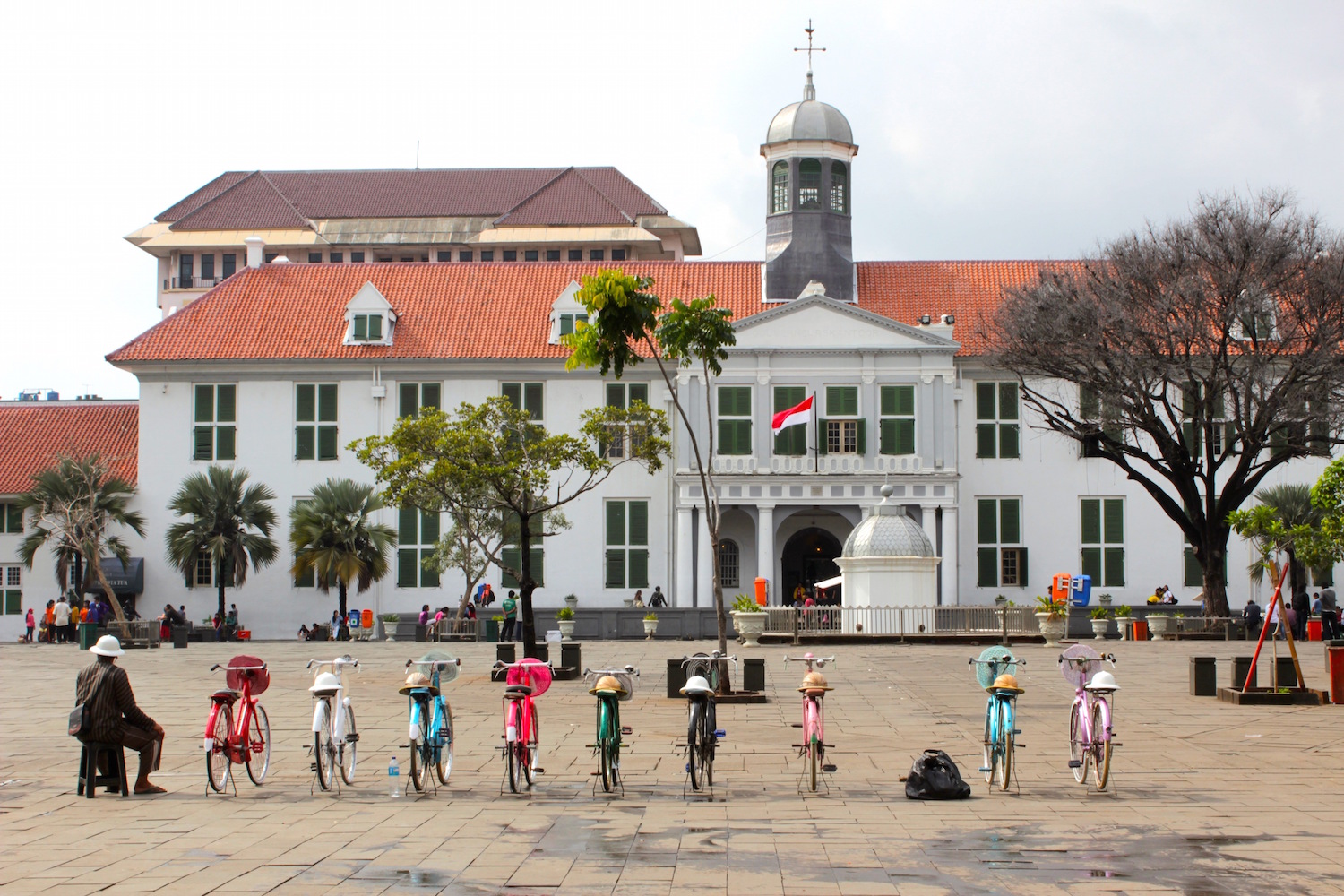
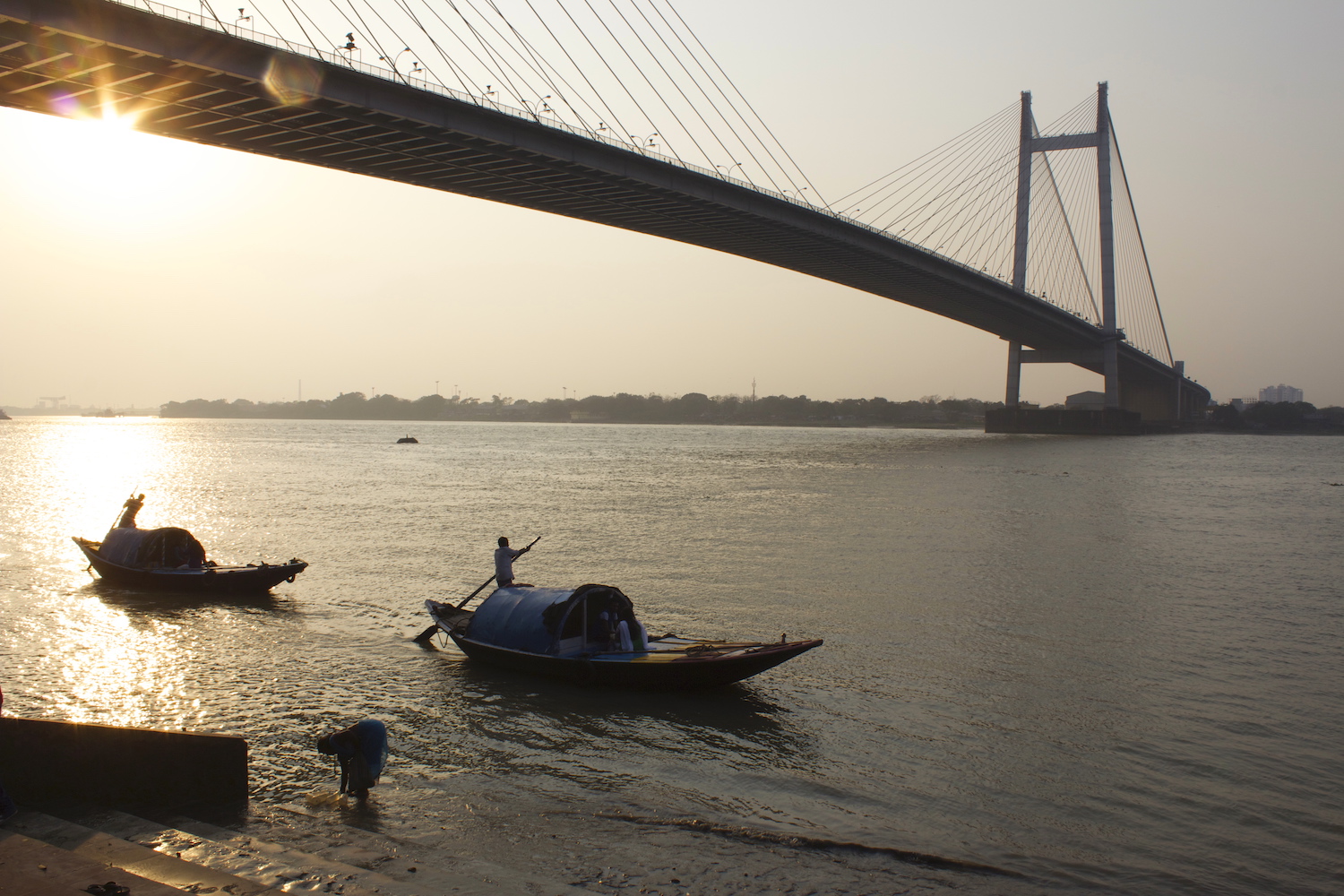
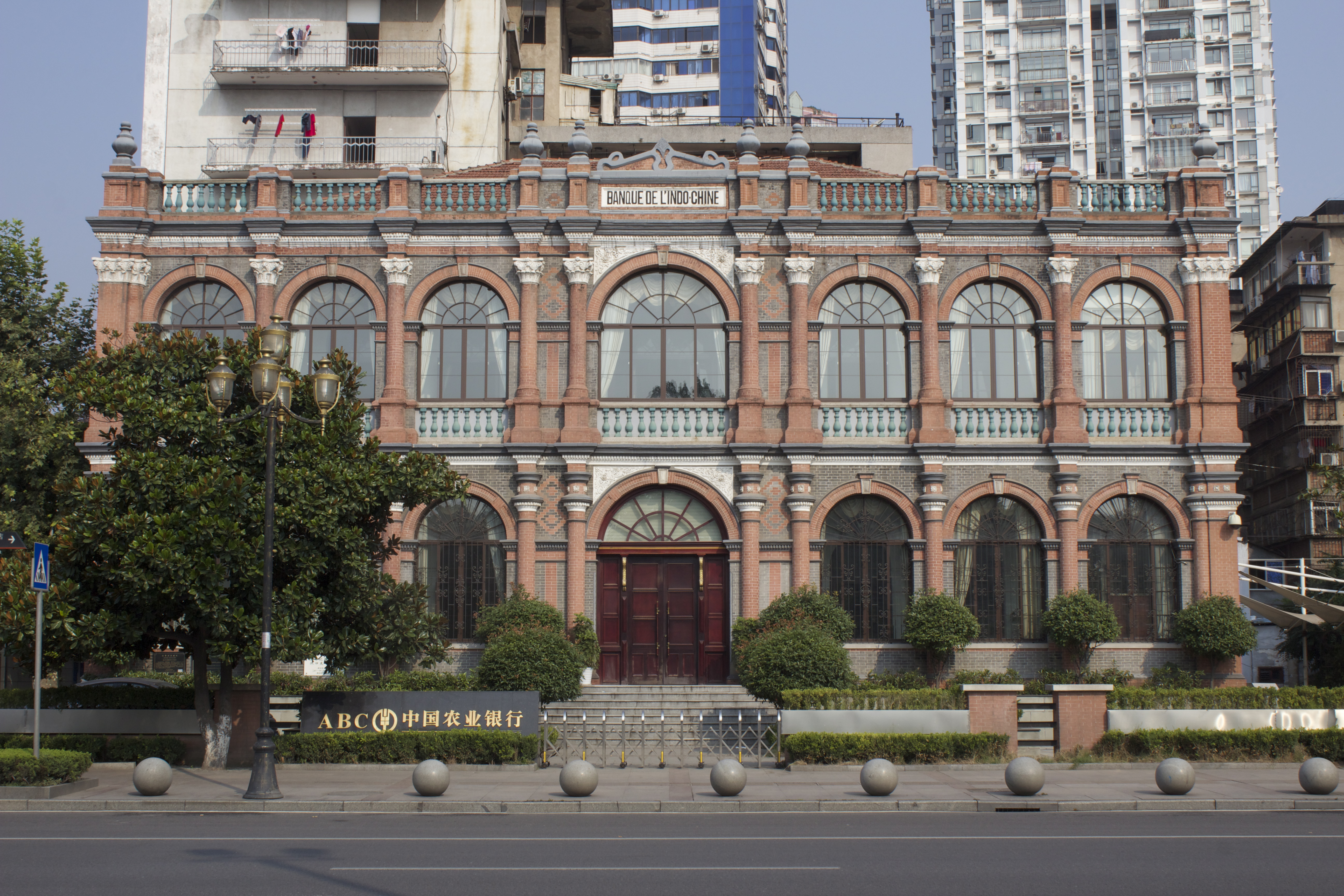

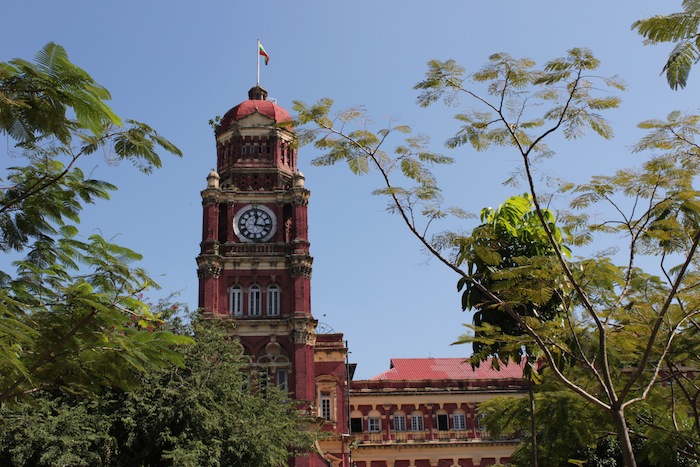
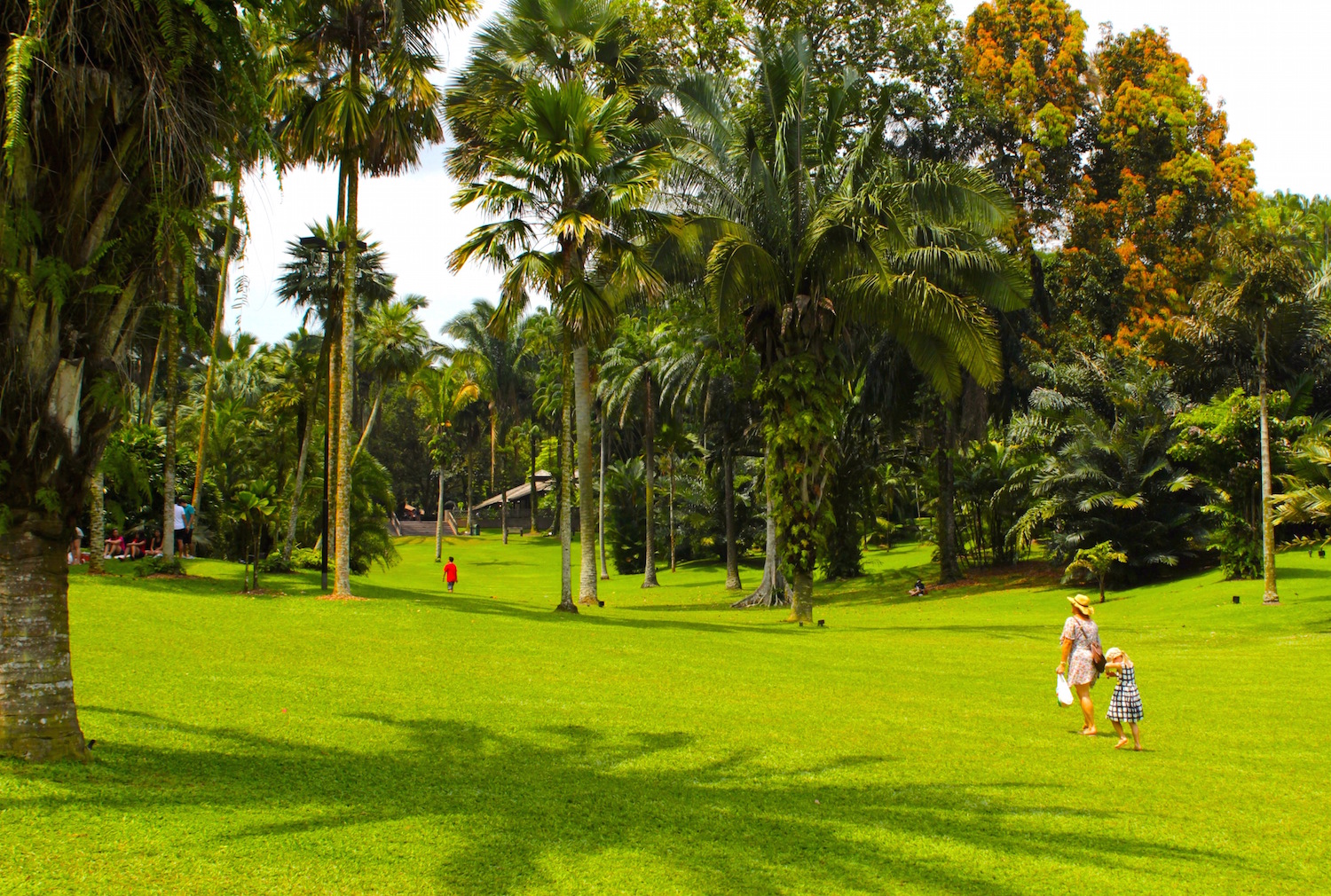
Between 2012 and 2019, I recorded my entire journey, replete with photographs, on this very blog, DREAM OF THE CITY. The three GRAND TOURS I meticulously “curated” are still here and may be viewed at the readers’ convenience.
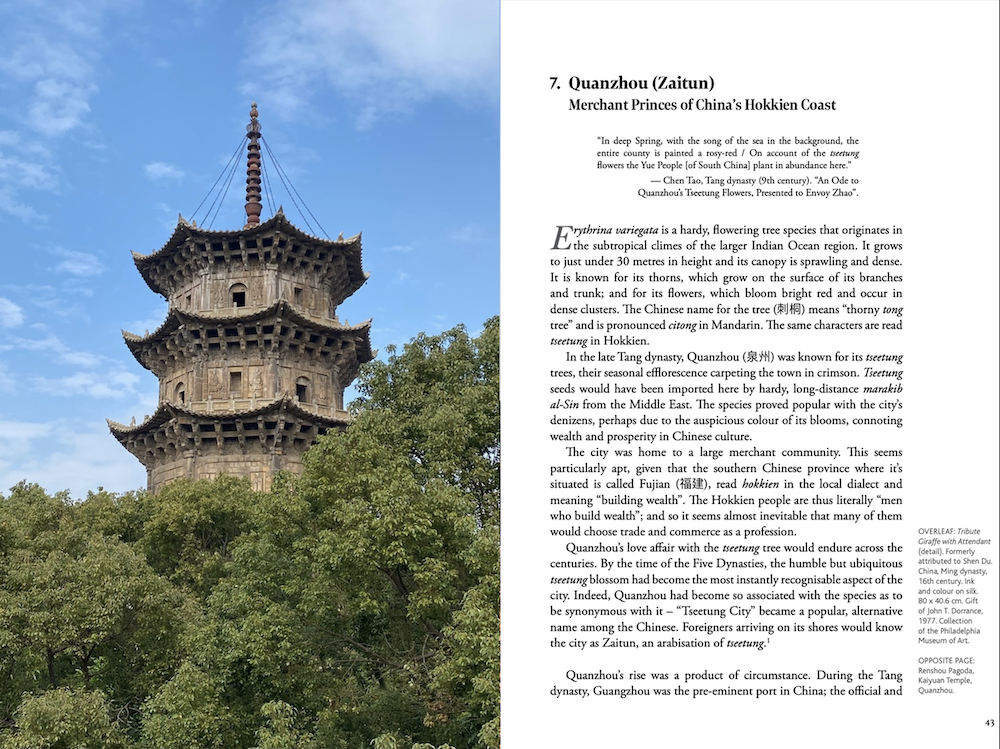
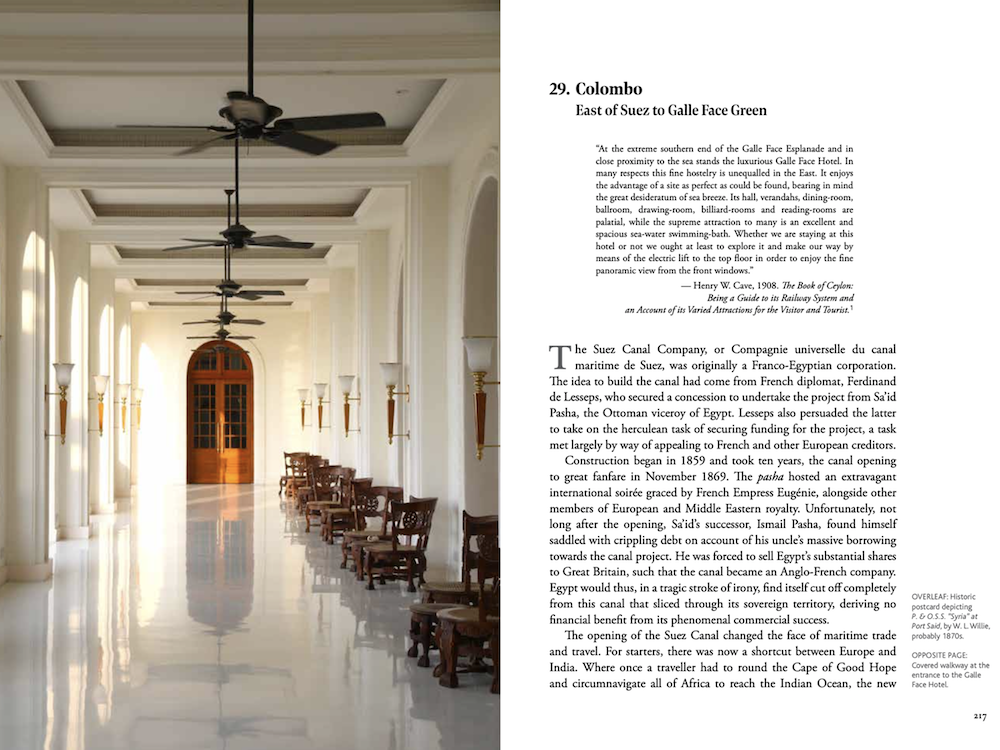
Building on all the research and photography I’d done, I was fortunate to be able to write a trilogy of books featuring the heritage of Asian port cities. The most important of these books, and the one I’m most pleased with, is THE GREAT PORT CITIES OF ASIA: IN HISTORY, published in 2024.
My approach to (hi)story-telling in this book is multi-disciplinary: I re-tell the history of some 60 port cities by way of architecture, art, cultural heritage, archaeology, literature, first-hand historical accounts (such as travel journals), food, fashion, natural history, and more.
Each chapter of the book is thus a potted history of one to three port cities. And each of these potted histories represents my attempt at capturing the appearance 面貌, feeling 感觉 and ultimately, the spirit 精神, of the city at a given period in time.
So, for example: Basra 2000 years ago, or Quanzhou, 1000 years ago, or Hoi An, 400 years ago, or Colombo 100 years ago, or contemporary Dubai…

I’d fixated on port cities for the simple reason that Singapore itself was one.
Contrary to popular sentiments believing the Lion City to be simply a ”young nation” and thus bereft of heritage, I saw Singapore as being the latest in a long line and legacy of cosmopolitan Asian port cities that date back millennia.
When considered in this light, Singapore thus had a formidable heritage – cached in the urban form and urban histories of the dozens of other cosmopolitan Asian port cities that have come before, or risen alongside her.
* * *
Come 2016, in an unexpected and baffling turn of events, I found myself appointed Director of the Asian Civilisations Museum and Peranakan Museum in Singapore.
I took over the museums in the midst of a major refresh and refurbishment of their physical gallery spaces. This meant I had the opportunity to re-imagine and re-make the museums according to my own specific vision.
Using the notion of “Singapore being a cosmopolitan Asian port city” as curatorial framework, I deconstructed the museum and reconstructed it from the grounds-up. The new ACM shed its earlier guise of a classical museum of ethnography and Asian Art, becoming something uniquely and idiosyncratically Singaporean.
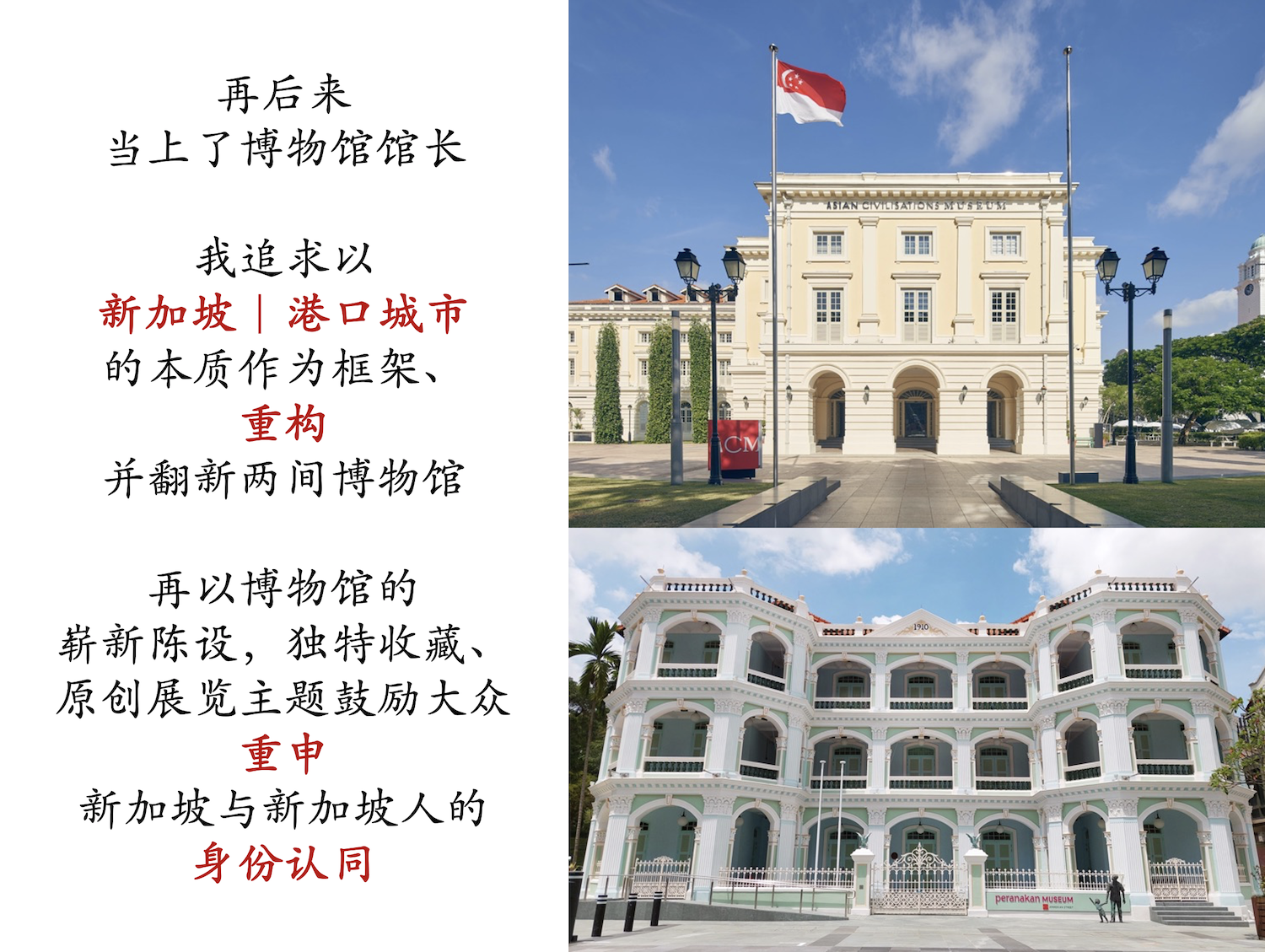
Three major paradigm shifts describe the “Kennie Ting-Era” of the institution. These shifts only made sense if one considered that Kennie Ting was an urbanist & street photographer.
The first shift was the introduction of THE CITY as central curatorial narrative in the museum.
Classical Asian Art museums typically featured art of the imperial Asian courts. I had absolutely no interest in that. I believed imperial art had very little to do with a merchant and immigrant culture such as that of Singapore’s.
So the museum’s collecting strategy had to change. It transitioned towards acquiring pieces relating to material culture, historic trade and commerce, faith and belief, innovation and design – everything that had to do with URBAN LIVING. [To be fair, this shift began under the auspices of my immediate predecessor.]
My interest was overwhelmingly to spotlight urban life and the creativity of city dwellers’, within the museum’s halls and galleries; to use the museum’s collections, displays and special exhibitions to reconstruct and convey the appearance 面貌, feeling 感觉 and spirit 精神 of a city – exactly what I had been trying to do in the books I’d written.
I was unapologetically earnest and dogged. The word “CITY” actually recurred in the title of every one of the initial exhibitions I helmed as director.
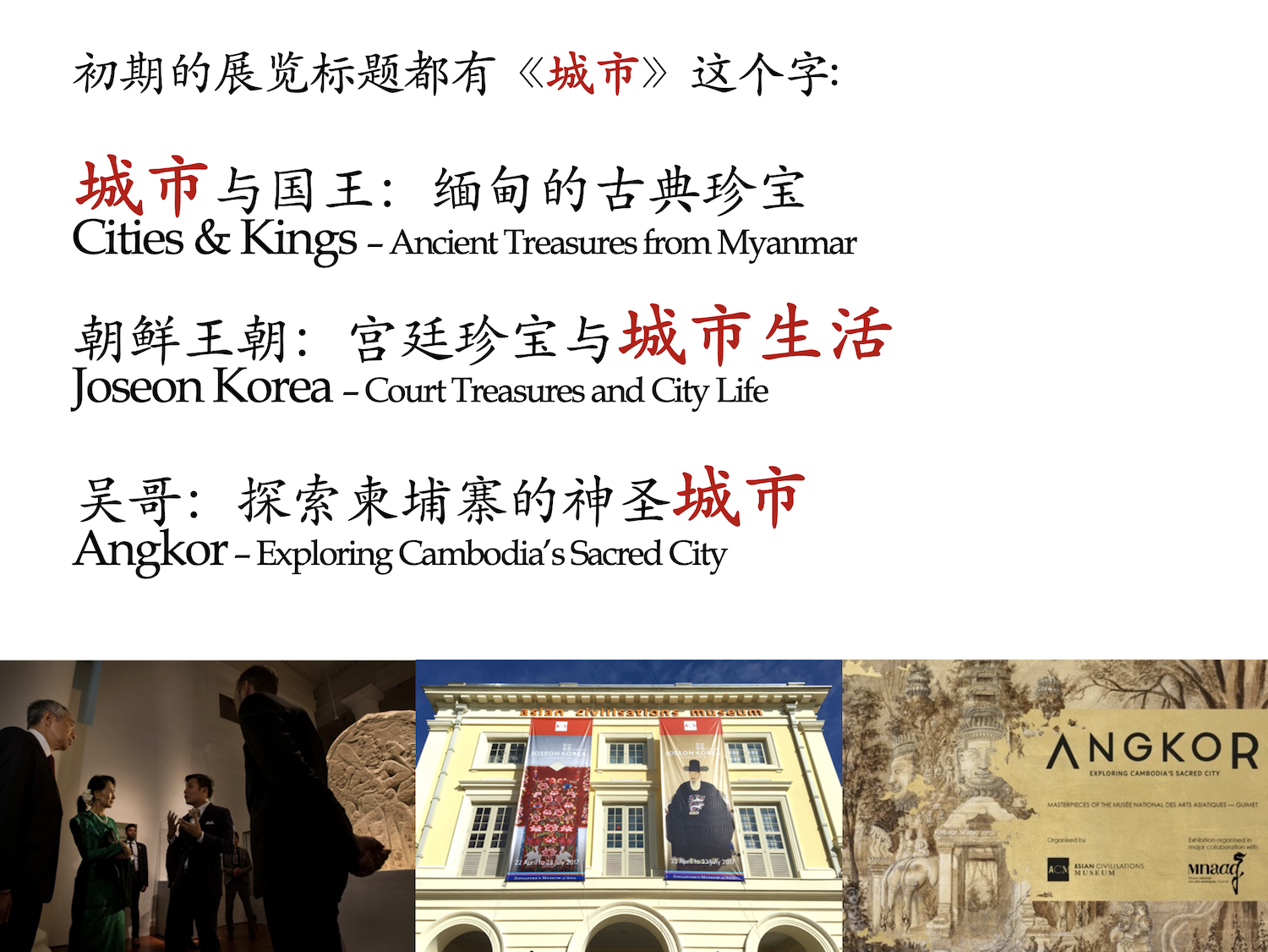
The second paradigm shift was a visual one. I brought my street photographers’ ethos and way of seeing the world into the museum.
Having spent a decade obsessively framing the perfect shot, so to speak, I would take this approach of a 观景窗 or “viewing window” into the gallery spaces, insisting on ravishing, gasp-inducing vistas everywhere one looked.
In the museum, it should be impossible to “get a bad shot”, so I demanded. This required exceptional lighting and placement; and harmony between tableau (i.e. the big picture view) and detail. All this in turn, necessitated unprecedented levels of professional and technical excellence.
The ideal outcome – so I insisted – was for the museum itself, and all of its galleries and displays, to be 百看不厌; for each visitor to be able to revisit the museum 100 times without ever getting tired of it.
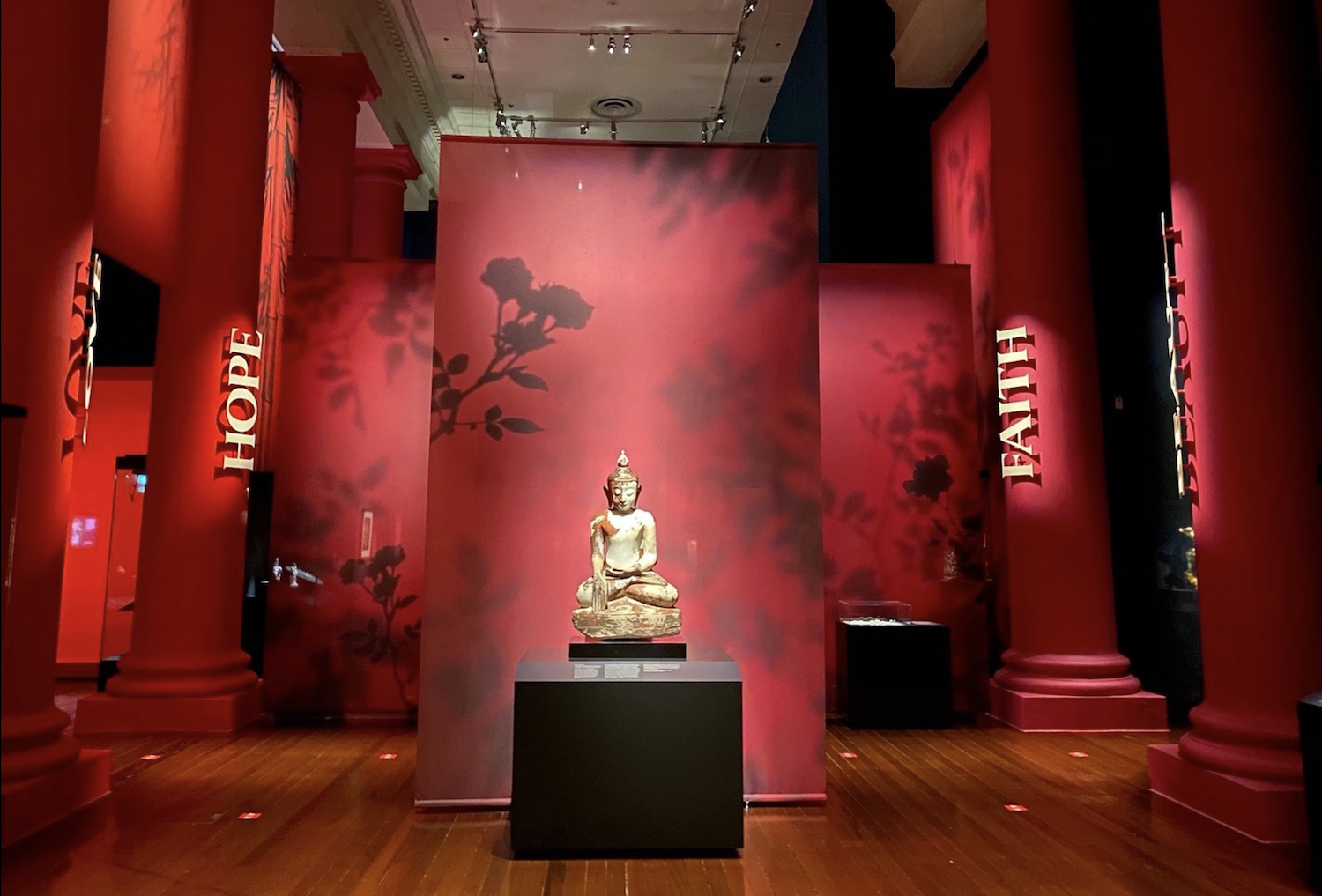
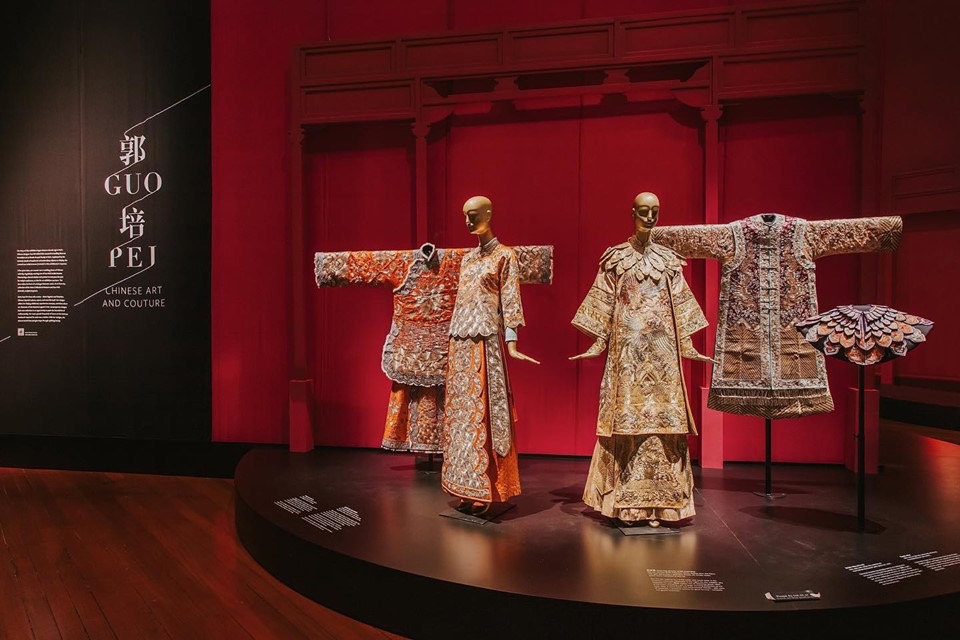
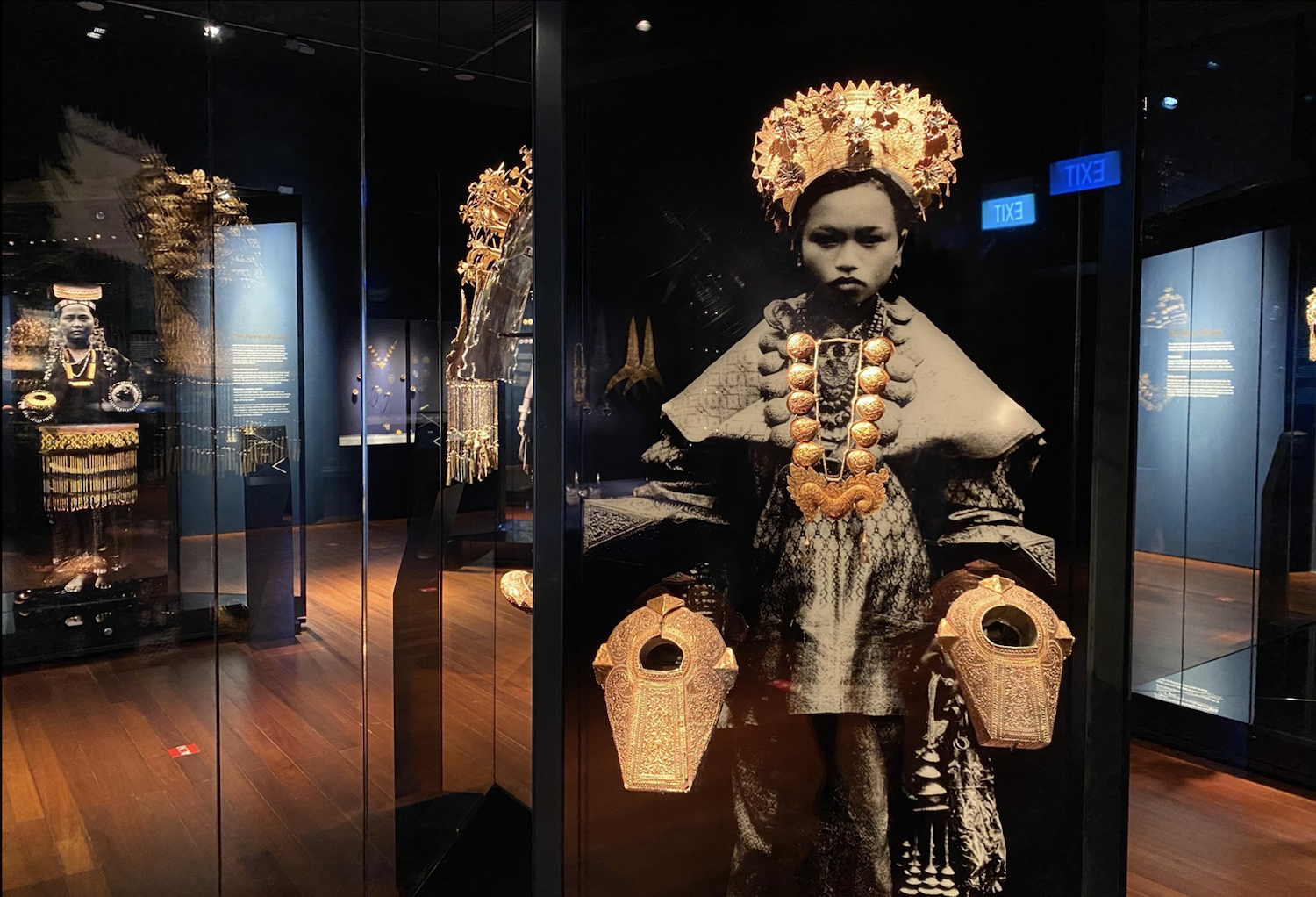
The third paradigm shift was aspirational in nature. I hoped to use the museum as a tool by which to encourage a richer and more complex exploration of Singapore’s cultural and creative identity; the spirit of the city-state, in other words.
This we did by way of framing (as earlier mentioned) the museum’s grand curatorial themes in terms drawn directly from Singapore’s essence as a cosmopolitan Asian port city. To wit: MARITIME TRADE, FAITH & BELIEF (i.e. Racial / Religious Harmony), MATERIALS & DESIGN (i.e. Innovation and Creativity) and PERANAKAN (i.e. Hybrid Communities).
These four curatorial themes were given fullest expression in the permanent galleries, and would recur in all of the museum’s special exhibitions, thus allowing for a uniquely Singaporean perspective in the curating of Asian cultural heritage; ensuring that the shadow of Singapore always lurked behind the façade of an exhibition that seemed to have little connection to our sunny little island.
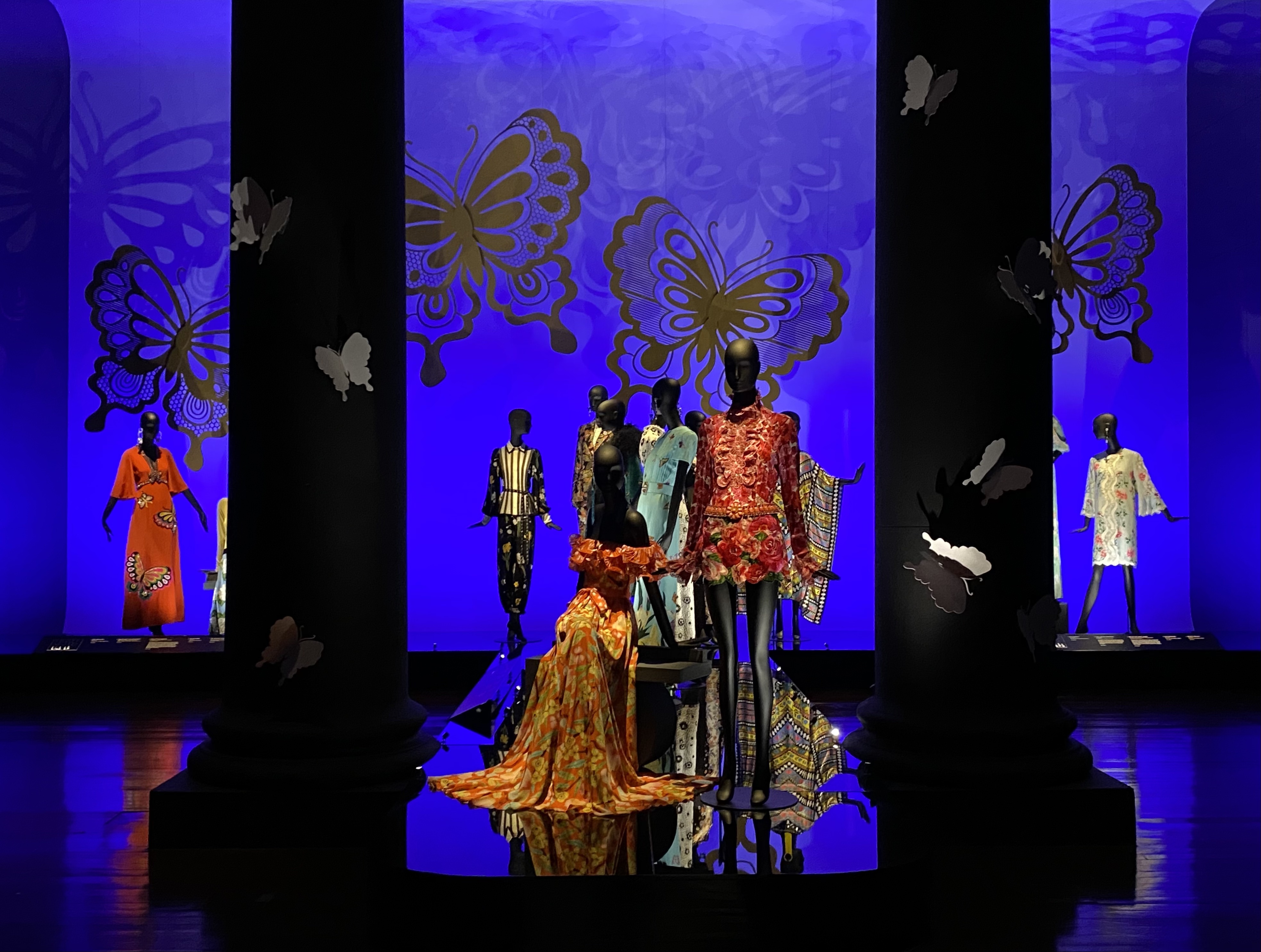

Later on, propelled by my hypothesis of city spirit as expression of creative energy, I would move decisively into the space of presenting contemporary design, even though this was not at all part of the ACM’s traditional scope.
Alongside exhibitions of contemporary Asian crafts(wo)men and designers, we also presented the works of contemporary Singaporean creatives – fashion designers, in the first instance.
My primary intent in doing so was to counter prevailing notions that Singapore “had no creative talent”. Presenting Singaporean talent at ACM had one key advantage: it allowed visitors to place Singapore’s creativity within the context of Asia’s rich, cultural heritage and its contemporary creative energy; thus seeing, much more clearly, how original and distinctive Singapore’s design identity was, and how dynamic the pulse in Singapore’s design scene.
The upshot of this perhaps subversive flirting with contemporary design in an ostensively antiquated (as in “having to do with antiquities” – but pun intended) museum was that I was finally able to come to some sort of understanding as to what Singapore’s city spirit was.
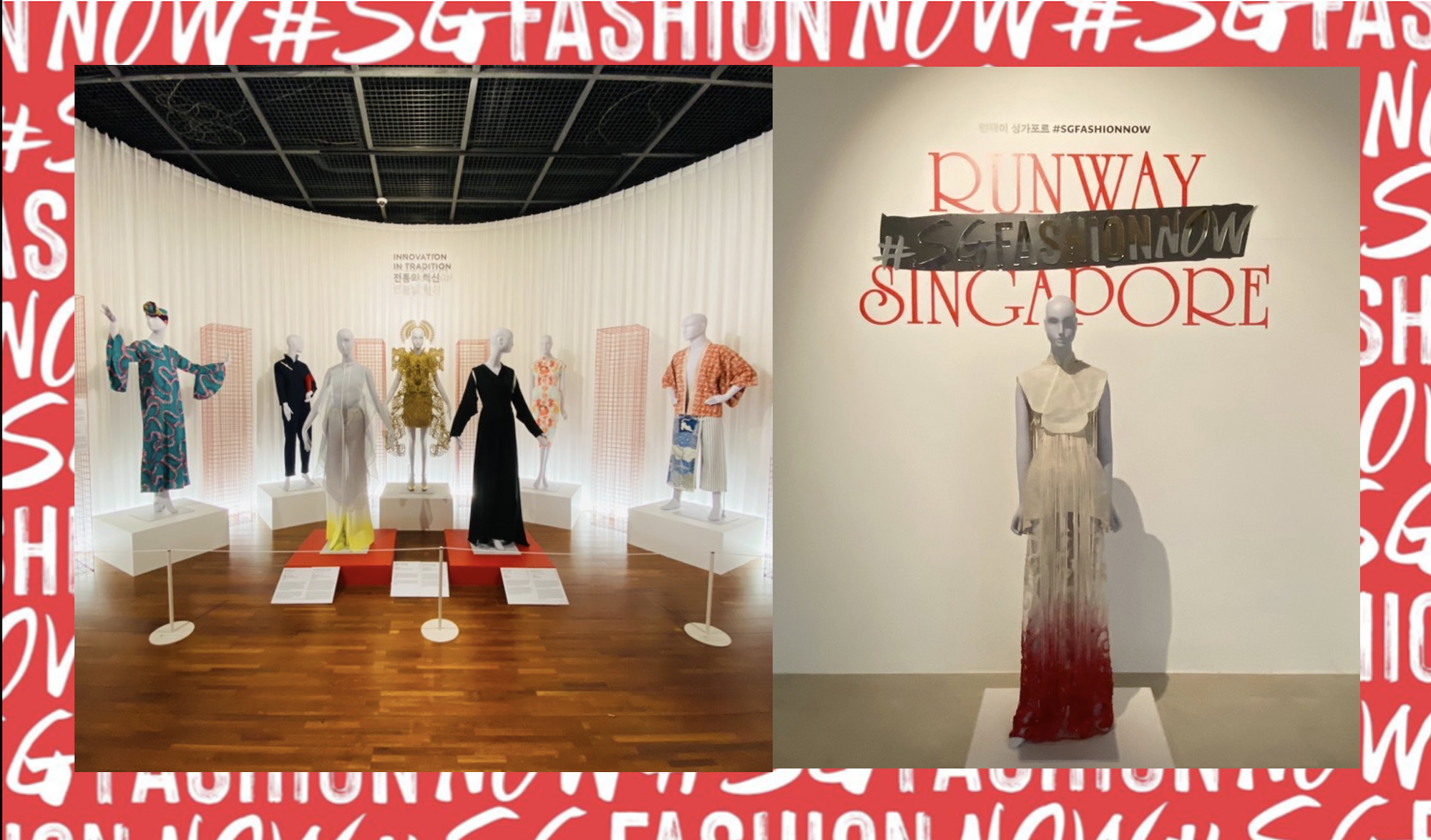
In self-penned Director’s Remarks at the 2023 Busan opening of RUNWAY SINGAPORE #SGFASHIONNOW – the final exhibition I was to helm and open – I found les mots justes to express all I’d learnt about the “Singapore Spirit” in the 12 years of wandering port cities and willfully de/re-constructing museums.
And I quote…
“The main question asked in the exhibition is what is Singapore fashion? We don’t provide an answer. Instead, we suggest that in their cross-cultural diversity, blending east and west, bridging contemporary and traditional, marrying craft and technology, the works of fashion presented in this exhibition reflect Singapore’s heritage and essence as a highly-urban, cosmopolitan, multi-cultural port city open to trade, commerce and innovation; and a crossroads of people, cultures, materials and ideas from all over the world. Seen in this light, the one thing we can say about Singapore fashion is that it is in constant flux, shifting and evolving; just like how Singapore as city and nation continually re-invents itself for the future.”
Having had the last word on Singapore’s spirit in relation to its contemporary creative energy, my work was done. It was time to step down from the museum, to pursue other swashbuckling adventures.
* * *
There are plenty other ways to understand a city’s spirit, of course; though these are beyond the scope of my post.
The word itself suggests a spiritual, or divine, dimension. In East Asian faiths there are 神様 kamisama or 神灵 shén líng – a bevy of lesser deities associated with specific locations in the city, and to which city dwellers pray for protection, prosperity, fertility and more. The Earth God and Goddess 土地公和土地婆 in Chinese tradition, for example, or the Fox Spirit 稲荷大神 (Inari Ookami) in Japanese tradition.
Many Chinese cities also have temples dedicated to a respective City God, or chéng huáng 城隍; while the Romans believed in the concept of genius loci, a protective spirit linked to a particular place. Taiwanese architect, Kris Yao’s lecture at the 17 May CITY INSIGHTS Cultural Forum used the concept of genius loci as its starting point and he spoke at length about the spirit 精神 of a place 地方.
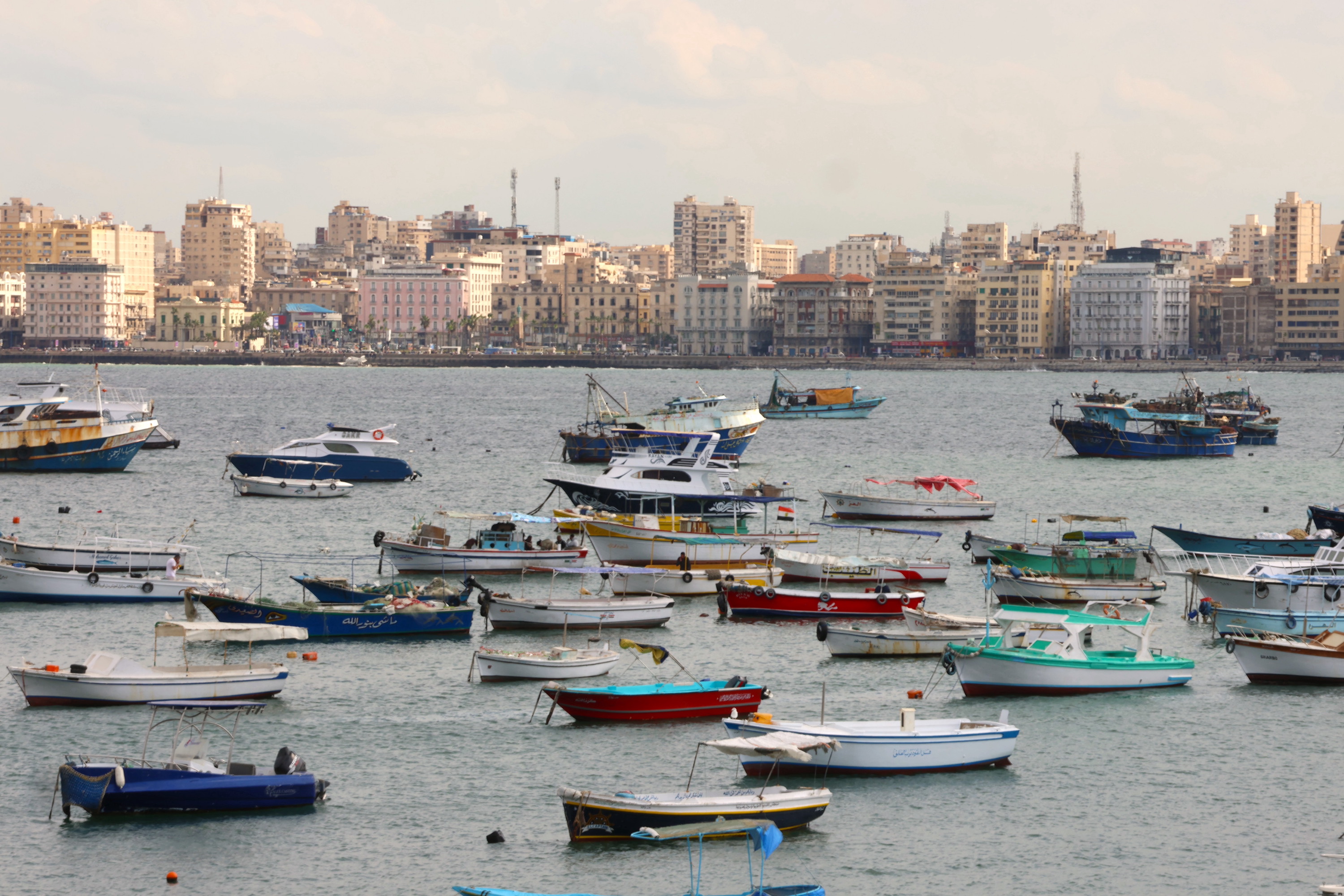
Certainly, in every city, one may point to certain places – often natural or historic features, but also contemporary landmarks and monuments – that capture if not the spirit, at least the essence, of that particular city. The Singapore River, for example, or Alexandria’s epic harbour; the Shanghai Bund, or Kyoto’s Gion district.
There is a community dimension to a city’s spirit. A City’s character is shaped by the degree to which its ordinary citizens get involved in their immediate community; and how actively engaged its citizenry, as a whole, is to matters pertaining to life in that city. Civic cohesion is a mark of the strength and resilience of a city’s spirit.
By extension, one speaks of a city’s unbroken spirit, in the context of war, civil unrest and the loss of human and urban landscapes. This rather more sober and militaristic approach to understanding a city’s spirit undergirds the next part of my Grand Tour, to the great Cosmopolitan Cities of the (Former) Levant, then as now, embroiled in seemingly never-ending inter-state and inter-cultural conflict.
Whatever the approach one takes in one’s search for the spirit of the city, it pays to remember that spirit is a thing ephemeral and emotive; it isn’t something that is seen, heard or touched; but rather, encountered, experienced, and – most importantly – felt.
Keep your spirits up, oh happy wanderers!!