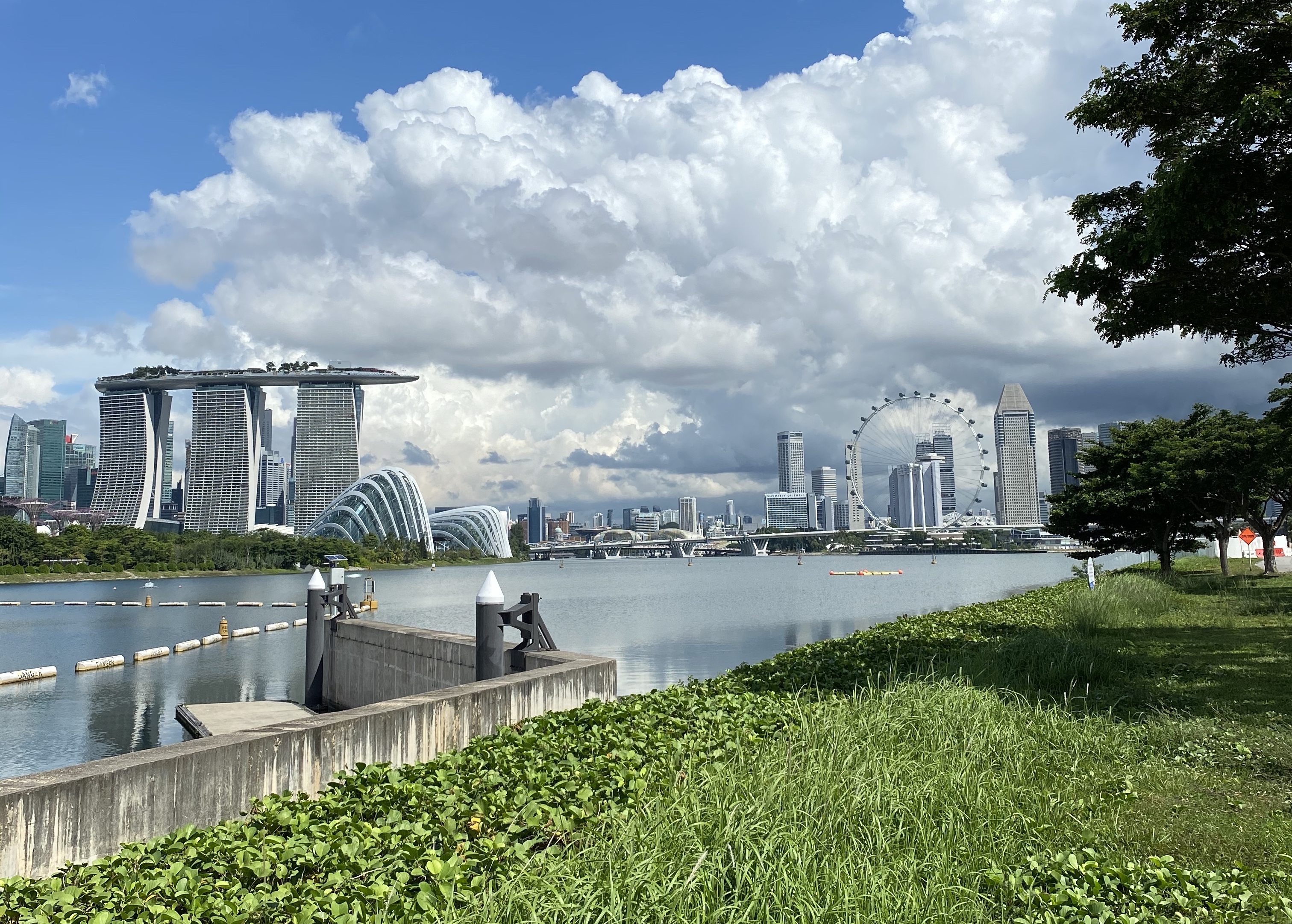
[CAPTION: The Singapore Skyline from Bay East Gardens. Sometimes, I ride my bike from home all the way into the city, all around Marina Bay, and back. I find it amazing how there’s almost seamless public infrastructure – the Park Connector Network (PCN) – that allows one to cycle continuously for hours and take in the best sights of the city. I typically stop briefly after crossing the bridge at Marina Barrage, to take in this breathtaking view of the skyline and the Bay, and to reflect on past, present and future. I typically choose to cycle just before lunchtime, when it’s hot and sunny, there’s hardly anybody else on the cycle paths. and I’m practically alone. It feels so wonderful having all of this to myself!! 😂]
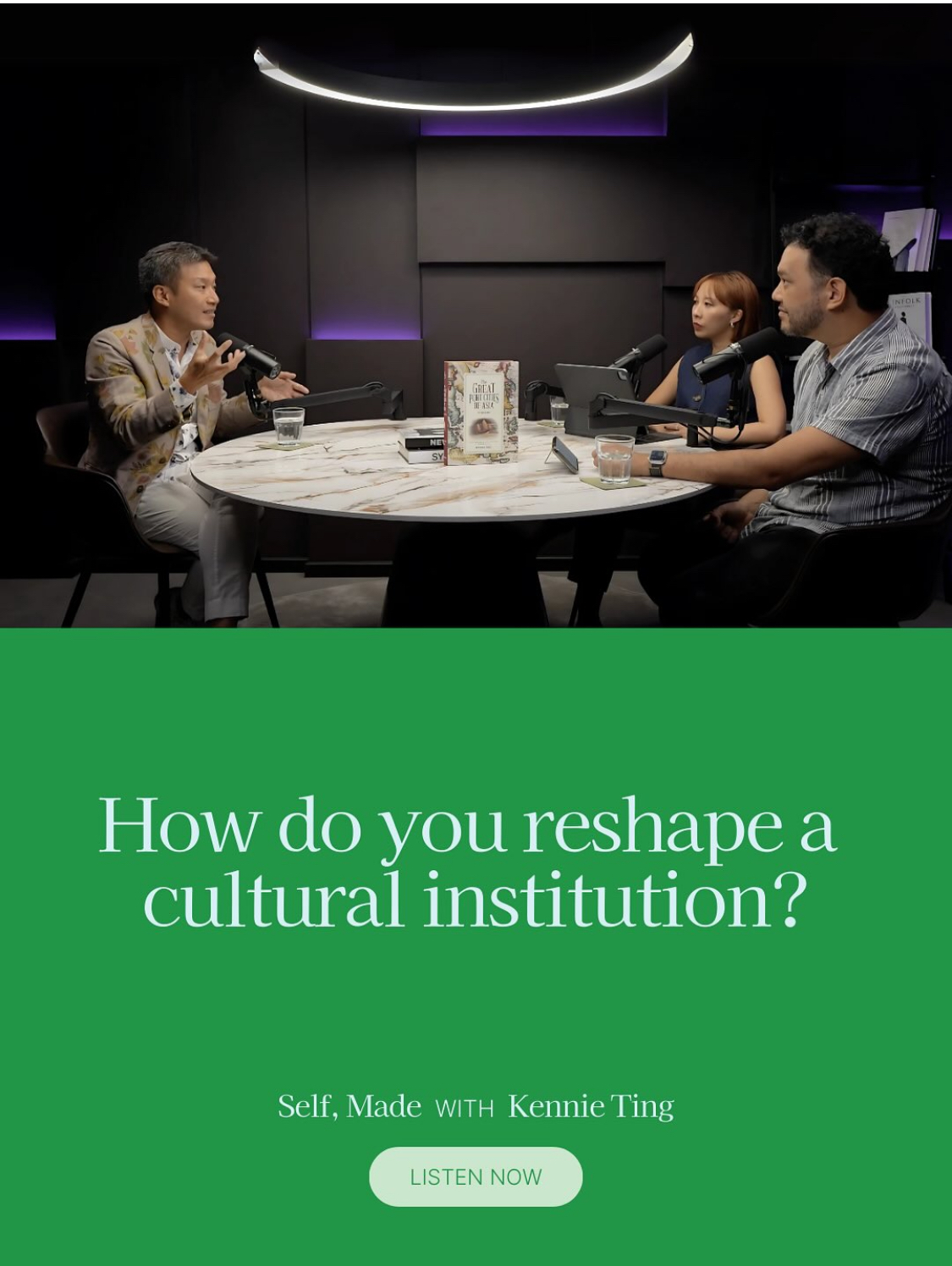
Not long after I stepped down from the museum last year, I was invited by SAYA, for an interview on their new podcast, SELF, MADE. Initially reluctant, I gave in. It turned out to be a joyful and transformative experience. [Link below]
In the last two weeks, SAYA have posted short excerpts from this interview on social media. Re-watching recent reels on Instagram, I was inspired to write this post.
I wish to thank the team at SAYA for the opportunity to be on their podcast in the first place; and for re-posting the interview right now, when I’m just this side of being completely lost in the woods, searching with open eyes, ears and intuition for the path ahead. I look forward to the Season 2 of SELF, MADE.
In the meantime…
[CAPTION: Self, Made – a new podcast helmed by SAYA. Here I am being interviewed last year by the multi-hyphenate, multi-award-winning film-maker, Quark Henares, and the inimitable Michelle Koh.]
* * *
Here’s what I think.
IMPACT and RELEVANCE are two sides of the same coin. To have impact – on society, let’s say – one must first be relevant to society.
Impact cannot simply be described with metrics, quantitative or otherwise. The world of working life, however, is awash with metrics of all kinds. It’s important to have something to measure as an indication of Performance. But for Performance to have Meaning, you first need to articulate Impact.
Impact is thus an upstream sort of thing; it shapes Purpose and Mission. You must know what Impact you want to have. Only then can you decide what strategy to adopt and actions to take, and what metrics to use to measure performance.
Even then, metrics only present one part of the picture. True Impact is felt – it is much bigger than the sum of the numbers. It can’t just be measured.
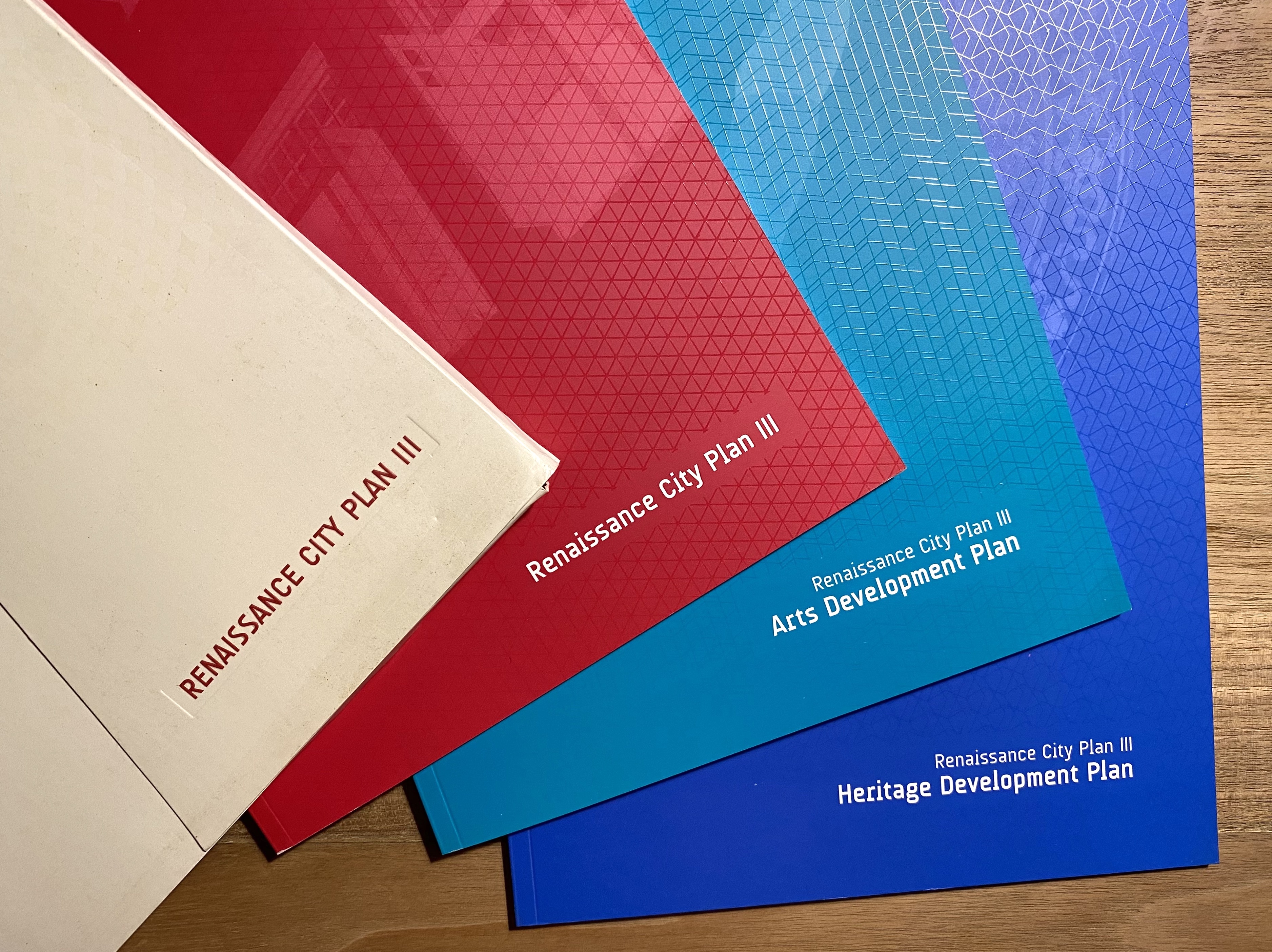
[CAPTION: Renaissance City Plan III – While at the former Ministry of Information, Communications and the Arts (MICA), I had the joy and privilege of working with a small group of like-minded arts administrators in articulating a major cultural masterplan for Singapore. I pretty much wrote the main plan (the book in red), which had three broad strategic outcomes: Distinctive Content, Dynamic Ecosystem, Engaged Community. Or in other words, we need to invest equally in good content, strong (arts) business and involved community in the arts and culture sector – if one part of this triumvirate is missing, we don’t have a thriving sector. ]
There are two types of Impact I wish to have. In this, I’ve been quite consistent all through my adult life.
I want to change the way people think – about themselves, about the community around them, about the world. I call this my IDEAS impact.
I also want to uplift PEOPLE, in all senses of the term. I want to build bridges, include and give voice, provide opportunity, inspire joy and hope, delight and entertain.
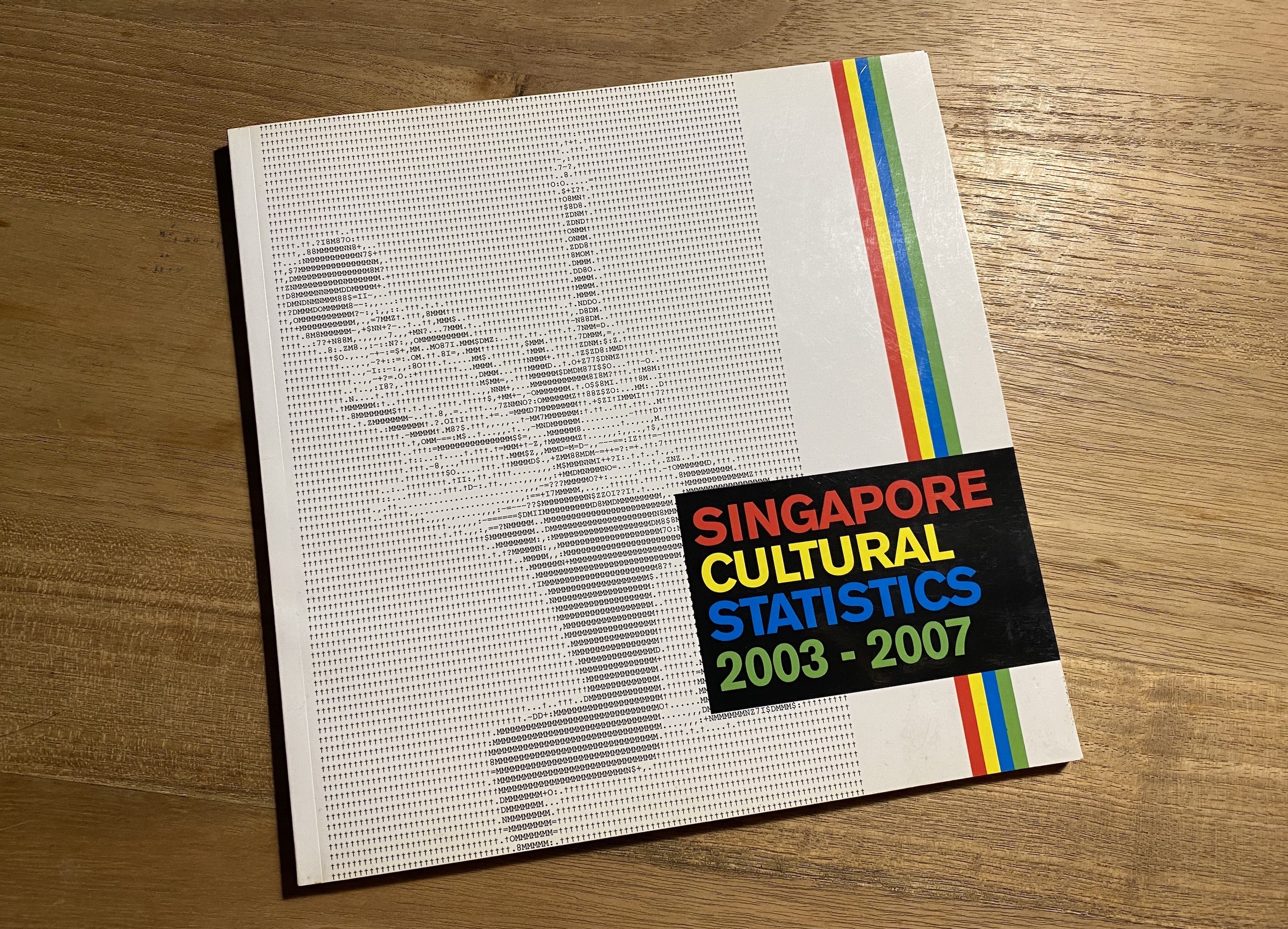
[CAPTION: And then, together with the small group of like-minded individuals, we started SINGAPORE CULTURAL STATISTICS, which pulled together data and key performance indicators (KPIs) from the arts, heritage, library and film industries. This annual publication was a measure of Singapore’s CULTURAL VITALITY. I wonder how things stand today with our cultural vitality. ]
* * *
On the IDEAS front, I’ve striven to have impact in multiple ways.
Firstly, to change the way people think about Singapore’s heritage and cultural identity. I did that with my books, and also with my work at the museum.
More recently, I strived to change the way people think about creativity in Singapore. This was because I once heard someone high-up say “there’s no such thing as Singapore fashion”. I don’t think people say that anymore.
I also tried hard to change the way people think about museums. I tried to show that they could be much more than just collections of objects in galleries. They could play a role in diplomacy, for example, and shed light on contemporary issues like world trade and geopolitics.
The notion that arts and culture have an intrinsic as well as instrumental value has been deeply ingrained in me. A decade before I took over the museum, I had co-written Singapore’s cultural masterplan laying out the case for museums and other cultural institutions contributing to Identity, Economy, and Community.
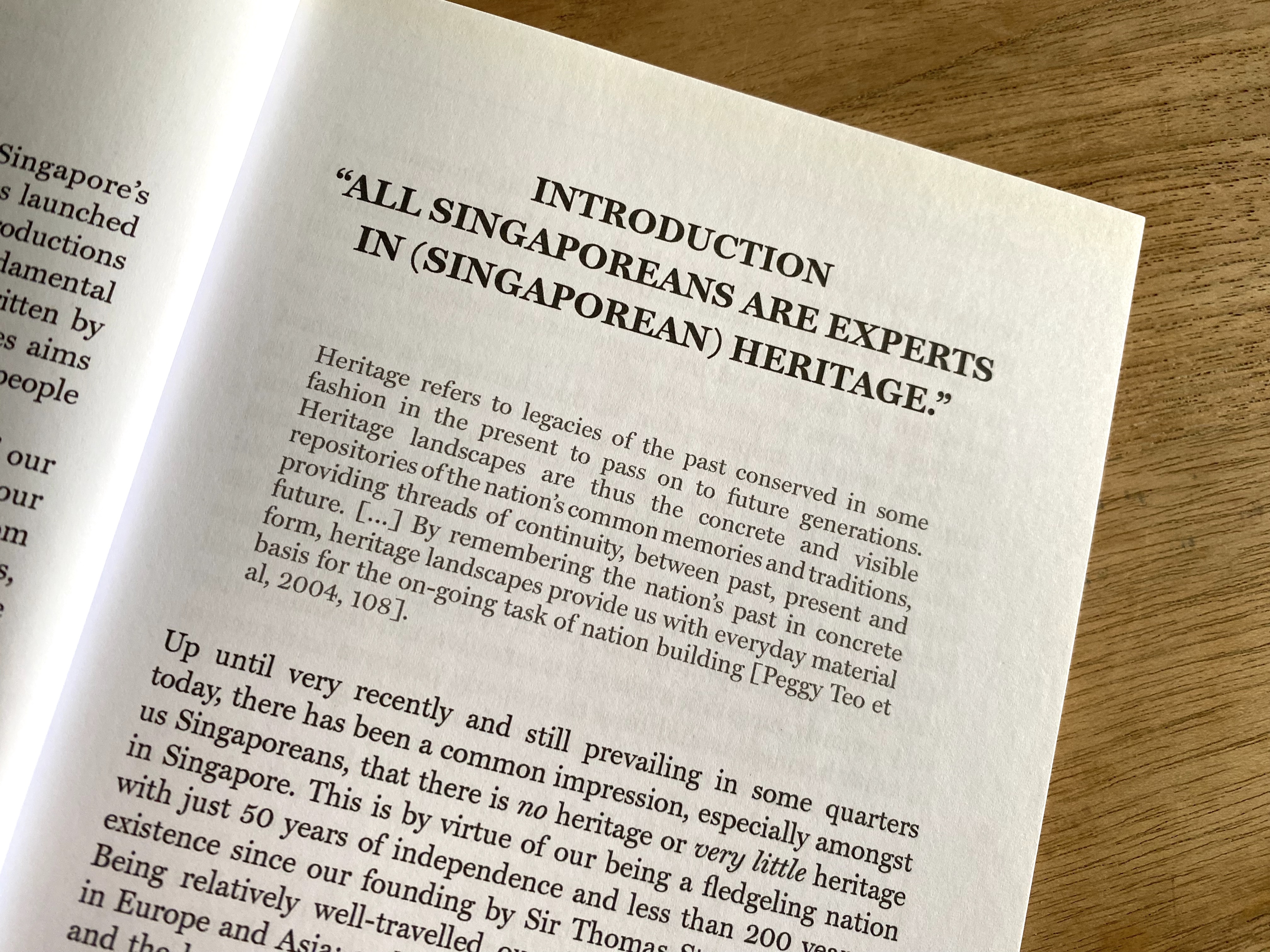
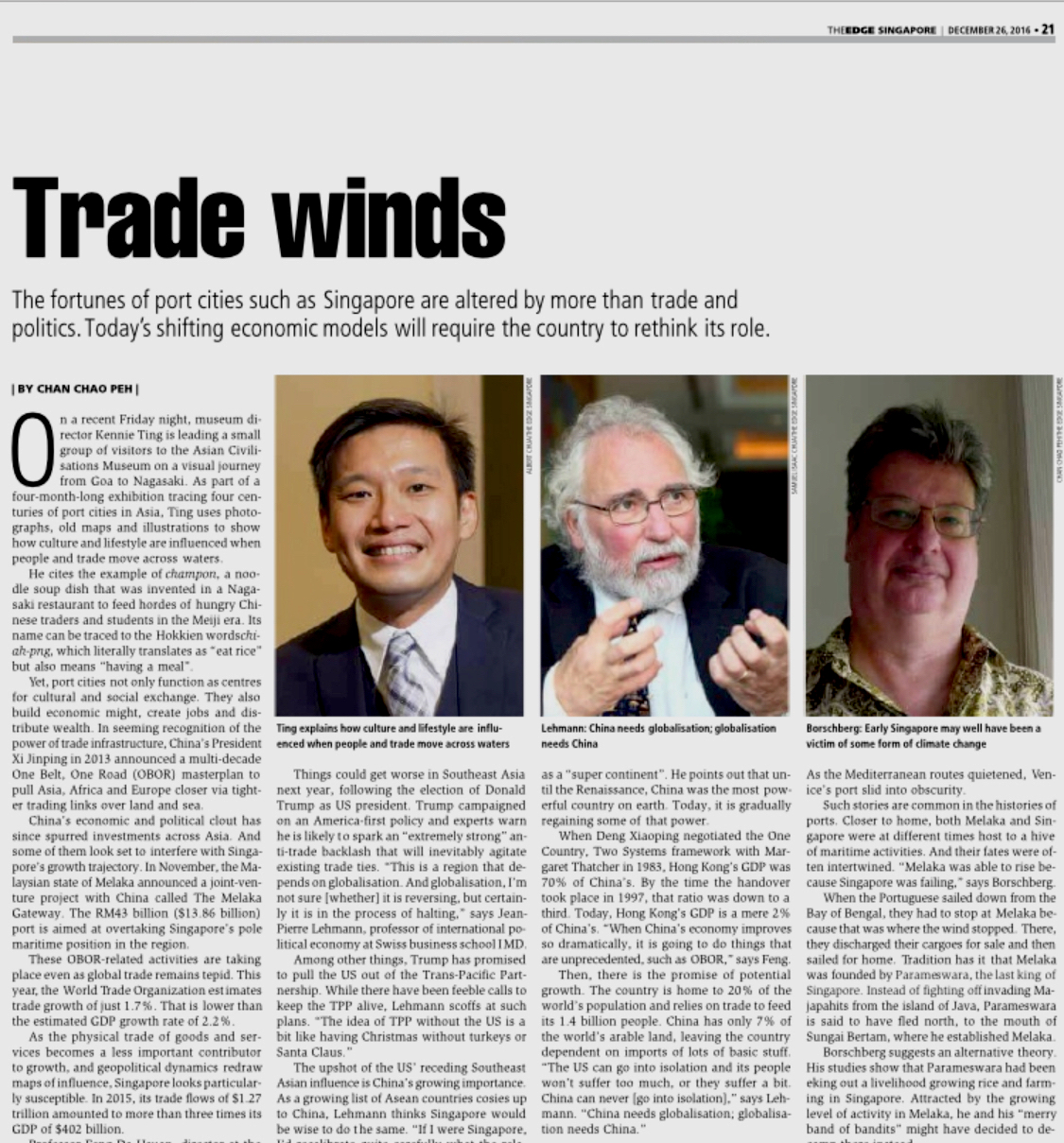
[CAPTION: The central thesis of my book SINGAPORE CHRONICLES: HERITAGE, commissioned by the Institute of Policy Studies to commemorate SG50 in 2015, was that “All Singaporeans are experts in (Singaporean) Heritage”. This was a response to an oft-heard quip that “there is no heritage in Singapore because we are such a young nation”. Thankfully, people don’t say that anymore. 😂][CAPTION: For more than a decade now, I’ve been on a journey to travel to, research, present / write about the history, heritage, art and material culture of Cosmopolitan Asian Port Cities. This journey was motivated by a desire to better understand myself as a Singaporean. The central argument of my work (written and at the museum) is this: if we see Singapore for what it is at its essence – a Cosmopolitan Asian Port City – then we have a heritage that spans millennia. The cultural heritage of other Cosmopolitan Asian Port Cities of the past are also our heritage. THE GREAT PORT CITIES OF ASIA: IN HISTORY was written with this in mind, though I’ve been told that my book was “not Singapore enough” by someone high-up, at a recent book event. This saddened me: as a Singaporean writing about global history (and the global roots of SG heritage), I’m not valid? ][CAPTION: Not long after I took over the museum, I gave a couple of lectures featuring my own personal wanderings across the port cities of Asia. I was so chuffed to find one of my talks featured in this article exploring how Singapore needed to change in light of a shift in economic models, global trade winds and geopolitics. This – so I thought – was one way history and the museum could be RELEVANT.]
* * *
IDEAS and PEOPLE are inextricable. When you are changing minds, you necessarily impact people.
Right from the beginning, I worked hard to fundamentally change the way the museum worked, in order that it could better touch and move people, and serve the public good.
I wanted the museum to make people FEEL deeply. To resemble a living, breathing human being rather than a soul-less, personality-less pile of brick and mortar.
Even as we furthered academic research and proposed new ideas about the world, I insisted on the museum being of real use and benefit to real people.
I tried to show that there was no dichotomy between a museum that was truly world-class and excellent, and a museum that was actively engaging the community. I went one step further, positioning the museum as a place of opportunity for talent within the larger creative ecosystem.
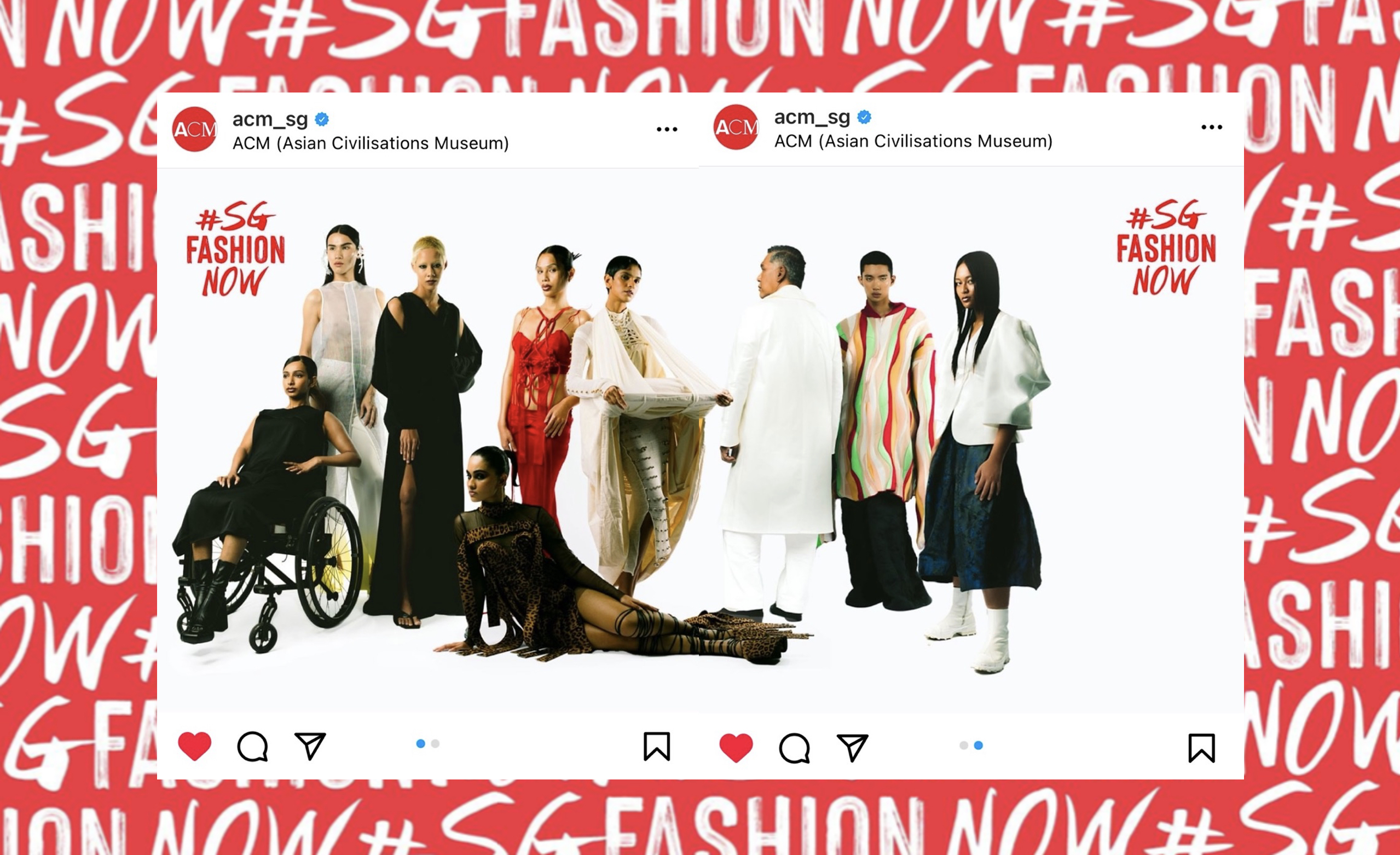
[CAPTION: JOSEON KOREA – COURT TREASURES & CITY LIFE exemplified the “packaged special exhibition”, wherein the exhibition itself was at the core of a full suite of offerings for a wide array of different audience segments. Every exhibition from hence had the following components: 1) A diplomatic-level special exhibition opening (where we invited ambassadors in town); 2) a donor/patron preview; 3) a press/media preview; 4) an academically-oriented exhibition publication + an international academic conference or series of talks; 5) A community weekend festival; 6) a visual-heavy contemporary art installation; 7) a special exhibition trail and trail booklet for families with children, 8) a digital, social media marketing campaign; 9) traditional art performances on the riverfront at night along with other night-time activities (for younger, lifestyle audiences), and more. After spending my first year walking the ground, talking to people and observing visitors, I did a “community map” of the different types of audiences that came to the museum, and worked with the team to re-design our special exhibitions into multi-faceted experiences, with something for everyone. This worked to significantly increase our footfall.][CAPTION: BODY & SPIRIT: THE HUMAN BODY IN THOUGHT AND PRACTICE was an unprecedented experiment; an inter-faith exhibition; a collab between the museum and Singapore’s communities of faith and belief. It was a community-oriented exhibition that was still world-class and just ravishing (in terms of lighting and design). It wasn’t easy to work with communities of faith – we had to build this relationship up first by way of smaller collaborative projects. People tended to focus a lot more on the museum’s collaborations with the fashion community because these were so much more visible. The fact was, I had been championing and insisting on us working with communities of faith long before we stepped into the space of fashion and design. By nature of the content, these collabs were always more discreetand respectful.It was also harder to promote the exhibition because religious objects are not allowed on promotional material in public spaces (e.g. MRT stations and streetlamp banners)][CAPTION: #SGFASHIONNOW was a radical and subversive experiment; unlike any other thing the museum had ever done. I’m so chuffed I was able to pull it off, heehee. It featured a multi-dimensional collab, between museum, university, industry association, the designers themselves and the media/press. The central thesis was consistent with everything I’d done thus far: an exploration of Singapore’s cosmopolitan port city heritage and cultural identity, this time by way of contemporary fashion (and popular culture). The exhibition was future-oriented – port cities aren’t just creatures of the past, after all. The 2023 edition opened in Busan and Seoul, South Korea. Each edition was curated by students from LASALLE College of the Arts, with faculty and the museum’s curatorial and exhibition teams guiding and advising. ]
* * *
Change doesn’t come easy. Old ways of working and thinking become entrenched. The old guard feels threatened and insecure. New, competing imperatives emerge that distract and confuse; try to lure you away.
In order to hold firm to one’s path, one has to have a strong personal compass – an understanding that one is ultimately accountable to one’s self for one’s actions.
Amongst other metrics, a tangible indicator of the IMPACT one has had, is how desirable the organisation becomes as place to invest in. I firmly believe that funding goes where there are great ideas and great people, and thus, great work is being done.
I left the institution in a far better state financially than when first I took it over. I brought in ten times my total salary across eight years of helming the museum – this in terms of earned revenues and private philanthropy only. The multiplier is much, much greater, if one includes new public funding I successfully fought for.
[CAPTION: The good people and professionals who work behind-the-scenes to make the museum’s visitor experience a safe, warm and welcoming one – these colleagues who helm visitor services, security, cleanliness and other aspects of museum operations. The most important part of the Museum is its People. Every day, I’d say hello and how are you to whoever I saw on the ground, and their hellos and how are yous in turn kept me going for the rest of the day. ][CAPTION: 100 Masterpieces of ACM – yet another unprecedented collab, this time with the volunteer Mandarin Guides and Lianhe Zaobao. This was our first and as yet only Chinese-language collection publication, and it stands testament to an outpouring of wisdom, beauty and love in the community. ]
But the real measure of impact is felt, as I said.
You feel it when more and more people reach out to you of their own accord and say they really want to come work with you and the institution you head. You feel it when an unsuspecting visitor enters an exhibition, and they gasp or go “wow”, and tell you later how they were so overwhelmed and moved by what they saw.
You feel it in the way a community partner tells you, over dinner, that “I felt so proud to see my culture and community being part of this exhibition; our piece standing alongside so many beautiful treasures”. You feel it when the student curators you gave an opportunity to find excellent jobs in great organisations, before the exhibition even concludes its run.
You feel it when someone you meet randomly at a social event tells you she knows of the museum only because of that luminous exhibition on photography and Kyoto. You feel it when a friend sends you evidence of how traces of what you’ve done linger on in the unlikeliest of places.
IMPACT is the satisfaction that comes when you know you have changed someone’s life forever.
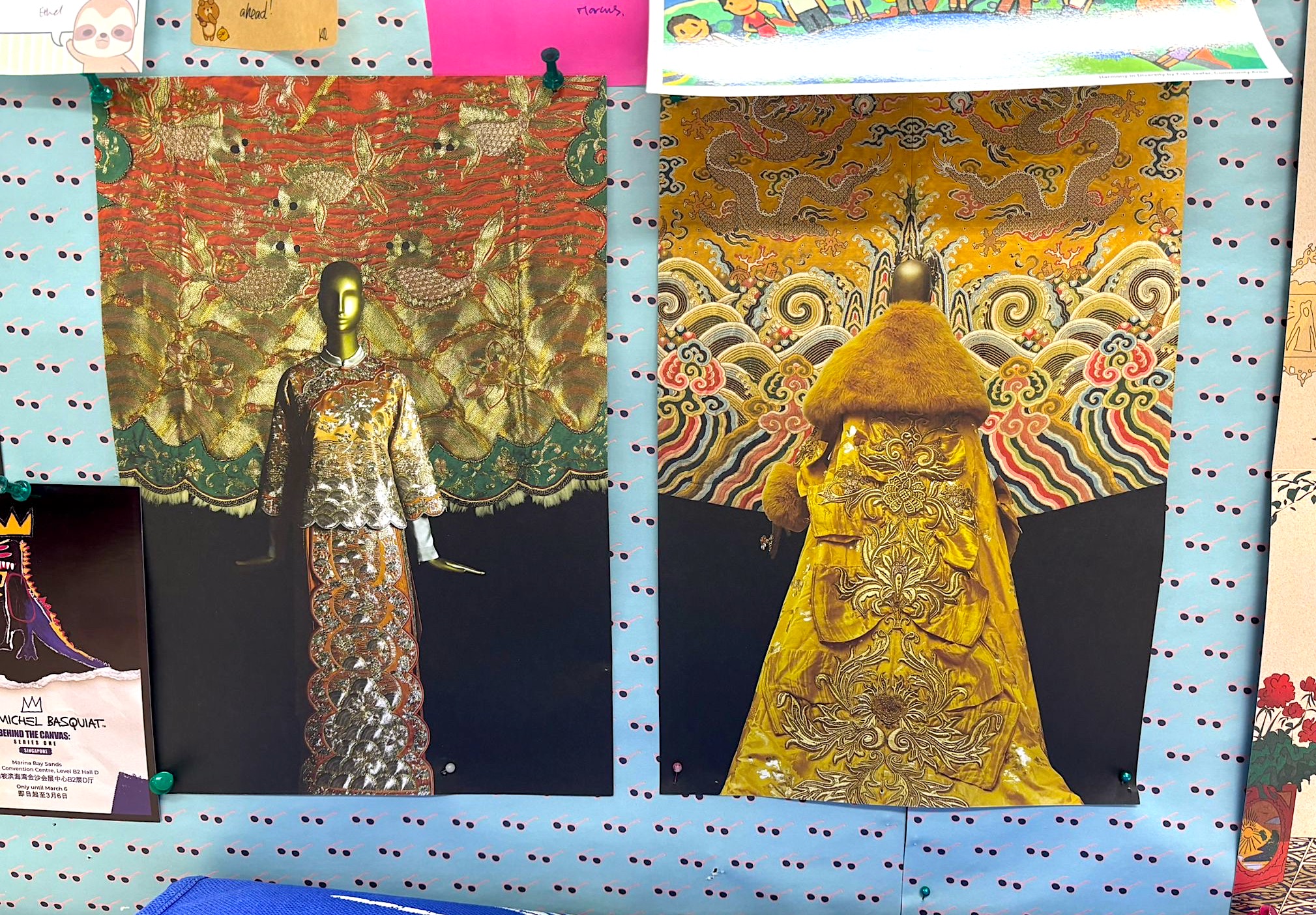
[CAPTION: A friend of mine sent me this photo last month: a fellow teacher in the school she’d just started working in had these pinned up at her desk. It warmed my heart to see the impact the exhibition GUO PEI: CHINESE ART & COUTURE had, and still has today. ]
* * *
So you’ve made your impact – you’ve done more than enough. 问心无愧. You know what you’ve achieved and you’re proud of your legacy.
You cast off your suit and sail off into the sunset, to wander the world and take a well-deserved breather. It’s important to do so, every few years in your professional life.
You seek inspiration and rapture, in a bid to re-group and re-energise.
You trust that at the opportune time, your personal compass will direct you to the next destination – the next opportunity for you to embody relevance and make an impact, ideally in a completely different form and style, but always with the same authenticity.
[CAPTION: I’m so proud to be included in this seminal publication that was just released. Edited by Ryan Kueh, Aaron Maniam and Cherie Tseng, it featured essays, by 60 local thinkers and personalities, which consider different aspects of Singapore as a Nation. My essay touches on Singapore heritage and its global origins (of course). 😅][CAPTION: Just over a month ago, I walked the Rail Corridor for the first time. The walk inspired this series of blogposts reflecting on my professional journey thus far. At the start of my walk at Lower Delta, a beautiful White-Crested Laughing Thrush appeared as if by magic. I couldn’t find the path to enter the rail corridor – and so it was there, directing me like a compass to where I needed to go. ]
I am a wandering cityophile and pattern-finder who is pathologically incapable of staying in one place for any long period of time. When I do, I see the place from different perspectives, obsessive-compulsively.








 Dream Of A City